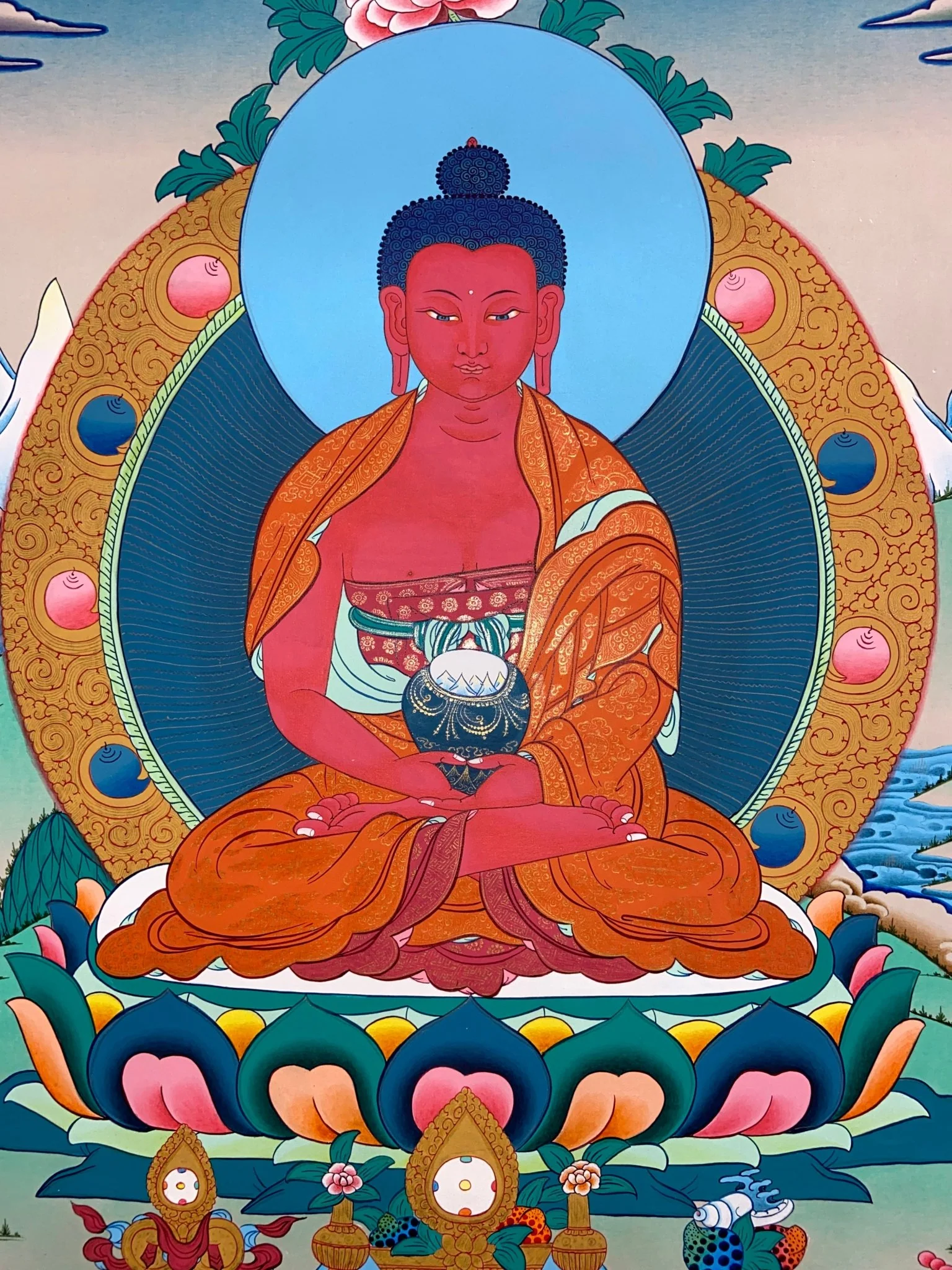
Amitabha Buddha, also known as Amitāyus—the Buddha of Infinite Light and Infinite Life—occupies a central place in Mahayana Buddhism. Revered as the presiding Buddha of the Western Pure Land (Sukhāvatī), Amitabha represents boundless compassion, wisdom, and the promise of liberation through faith and sincere aspiration. Although his devotion flourished most visibly in East Asia, his origins and philosophical foundations are deeply rooted in India.
Indian Origins of Amitabha Doctrine
The earliest references to Amitabha Buddha appear in Indian Mahayana sutras composed between the 1st and 2nd centuries CE. Texts such as the Larger Sukhāvatīvyūha Sūtra and Smaller Sukhāvatīvyūha Sūtra were composed in Sanskrit in the Indian subcontinent. These scriptures describe Amitabha as a former bodhisattva named Dharmākara, who made forty-eight great vows—most famously the vow to establish a Pure Land where beings could attain enlightenment free from suffering.
These sutras emerged in the same intellectual and spiritual environment that produced other core Mahayana ideas: universal compassion, the bodhisattva ideal, and multiple Buddha realms. Thus, Amitabha devotion is not a later foreign addition but an organic development within Indian Buddhist thought.
Transmission from India to Asia
From India, the Amitabha teachings traveled along trade routes and monastic networks to Central Asia, China, Korea, Japan, Tibet, and Southeast Asia. Indian monks and scholars played a decisive role in this transmission. One of the most influential figures was the Kushan-era monk Lokakṣema, who translated early Pure Land sutras from Sanskrit into Chinese in the 2nd century CE. These translations preserved the Indian philosophical core while allowing new devotional forms to flourish abroad.
Artistic and Cultural Links
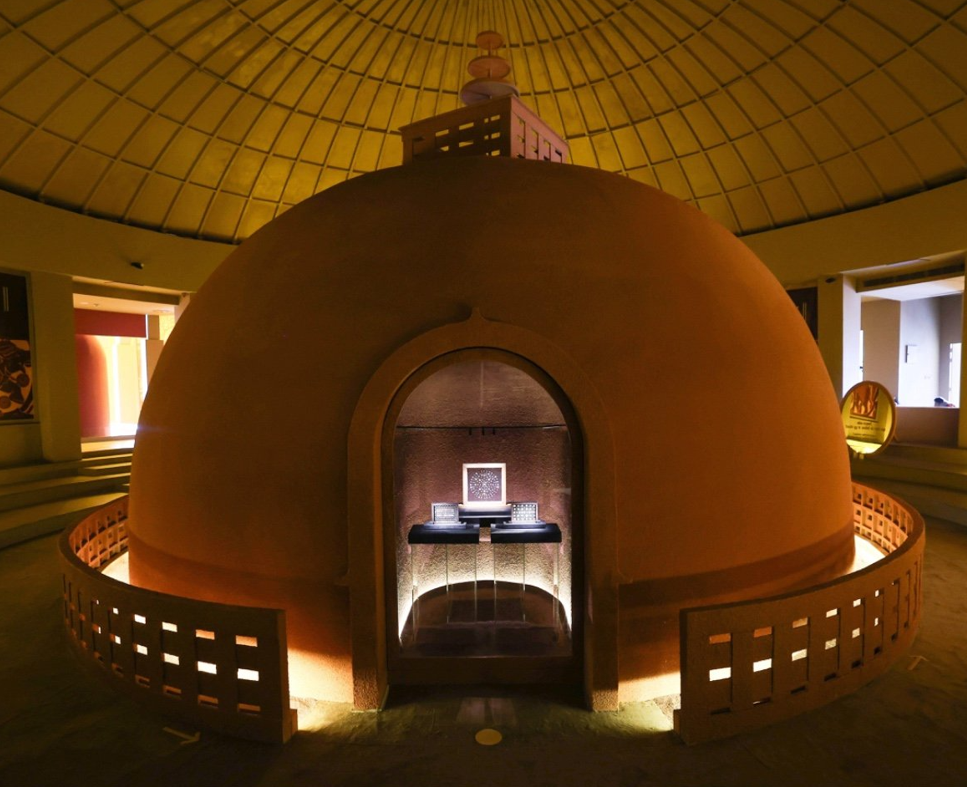
Indian Buddhist art also reflects early Pure Land themes. While Amitabha imagery became especially prominent in later Chinese and Japanese art, traces of Mahayana devotional symbolism appear in Indian sites such as Ajanta, Ellora, and Nalanda, where celestial Buddhas and transcendent realms are depicted. These artistic traditions formed the visual and symbolic vocabulary that later cultures expanded upon.
Amitabha in Indo-Tibetan Buddhism
In Vajrayana and Indo-Tibetan Buddhism, Amitabha remains one of the Five Dhyani Buddhas, associated with the lotus family and discriminating wisdom. His mantra and visualization practices, preserved in Sanskrit and Tibetan lineages, further underscore his Indian spiritual heritage.
India as the Sacred Source
Although Pure Land Buddhism is most strongly associated today with East Asia, its heart lies in India—the land where the Mahayana vision took shape. Amitabha Buddha stands as a reminder of India’s role not only as the birthplace of Buddhism, but as the creative wellspring of ideas that offered hope, accessibility, and compassion to countless beings across cultures.
In this way, Amitabha’s Infinite Light continues to shine outward from India, illuminating spiritual paths far beyond its borders.