Buddhism Preservation A Shared Global Responsibility

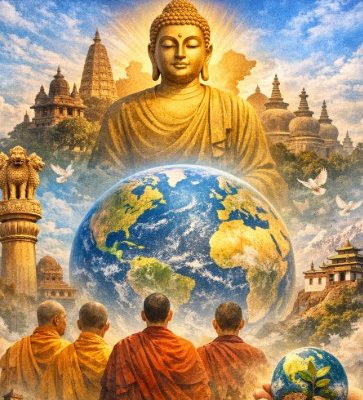
Preserving Buddhism in India and Across the World Buddhism, one of the world’s oldest spiritual traditions, has faced periods of decline, especially in India where it originated. Over time, social changes, invasions, and the rise of other traditions led to a reduction in its influence. However, the need today is not just revival, but active preservation of Buddhist teachings and values both in India and globally. Historical Efforts to Protect Buddhism In ancient times, leaders like Ashoka played a crucial role in spreading and safeguarding Buddhism. He promoted teachings of compassion, nonviolence, and moral living across his empire and beyond. In modern history, B. R. Ambedkar revived Buddhism in India through Neo Buddhism, encouraging millions to embrace it as a path of equality and dignity. Why Preservation of Buddhism Matters Today Buddhism offers timeless values such as mindfulness, compassion, and peace—principles that are deeply needed in today’s fast-paced and often divided world. Preserving Buddhism means protecting these teachings so future generations can benefit from a path that reduces suffering and promotes harmony. Practical Ways to Preserve Buddhism Worldwide Preserving Buddhism is not only the responsibility of monks or institutions but of individuals as well. People can contribute by practicing meditation, studying Buddhist teachings, supporting monasteries, and spreading awareness through education and digital platforms. Encouraging younger generations to understand and follow these teachings is also essential for long-term preservation. A Global Responsibility Today, Buddhism is practiced across many countries, making its preservation a shared global responsibility. By living according to its principles—mindfulness, compassion, and ethical conduct—individuals help keep the essence of Buddhism alive. Preservation is not just about protecting history, but about practicing and passing on a way of life that benefits all humanity. Conclusion The future of Buddhism depends on conscious efforts to preserve and practice its teachings. From ancient emperors to modern reformers, the journey of Buddhism shows resilience and transformation. Now, it is up to people around the world to continue this legacy, ensuring that the wisdom of Buddhism remains alive for generations to come.

Read More

How Buddhism Spread Across Europe — And India’s Timeless Role

Buddhism, born over 2,500 years ago in northeastern India, remains one of the world’s most enduring spiritual traditions. From its origins under Prince Siddhartha Gautama in the ancient kingdoms of Magadha and Kosala, Buddhism’s message of peace, compassion, and inner transformation journeyed far beyond the Indian subcontinent — across Asia, through the ancient Silk Routes, and ultimately into Europe. India’s role in this global flowering is foundational not only as the cradle of the Buddha’s teachings but as the seedbed from which these teachings sprouted and adapted in new lands. Indo-Buddhist Heritage Forum+1 The Roots: India as the Cradle of Buddhism India’s contribution to Buddhism is profound. It is the land where Siddhartha attained enlightenment beneath the Bodhi Tree at Bodh Gaya and lived the dhamma that would transform human history. Under Indian patronage — most notably by the Mauryan emperor Ashoka in the 3rd century BCE — Buddhism expanded across the subcontinent, fostered monastic universities like Nalanda and Vikramashila, and forged networks of scholars and monks who carried the dhamma along trade routes into distant regions. Indo-Buddhist Heritage Forum+1 The Silk Route, an ancient network of land and sea pathways originating in northwestern India, became the vital conduit through which Buddhism traveled into Central Asia, China, Korea, Japan, and beyond. Merchants, pilgrims, monks, and artisans carried scriptures, art, and teachings — blending them with local cultures — establishing Buddhism as both a spiritual force and a cultural bridge across continents. Indo-Buddhist Heritage Forum+1 Early Contacts with the West Although Buddhism did not take strong institutional root in Europe in antiquity, early contact did occur. During and after the campaigns of Alexander the Great (4th century BCE), cultural exchange between Hellenistic and Indian spheres encouraged early forms of syncretism now known as Greco-Buddhism, particularly in the region of Gandhara (modern Pakistan and Afghanistan). There, Buddhist ideas and iconography intersected with Greek aesthetic influences, creating some of the earliest anthropomorphic images of the Buddha and signaling Buddhism’s westward intellectual reach. Wikipedia+1 Modern Transmission to Europe It was not until the 19th and 20th centuries that Buddhism began to establish a visible presence in Europe as a living tradition, rather than as an academic curiosity. European scholars, often influenced by their study of Indian texts and archaeological discoveries, helped introduce Buddhist ideas into Western intellectual circles. Encyclopedia Britannica https://ibhforum.org/buddhism-study-its-origins-and-global-footsteps/ By the late 1800s and early 1900s, translated Buddhist scriptures, lectures by Asian teachers, and encounters between European Orientalists and Indian culture deepened European engagement with Buddhism. Philosophers, poets, and writers began to explore Buddhist teachings on consciousness, ethics, and the nature of existence, creating fertile ground for spiritual seekers. BHARATA BHARATI 20th-Century Growth and Institutions The post-World War II era saw rapid growth of Buddhist practice in Europe. Immigrants from China, Japan, and Southeast Asia brought rich traditions that formed diasporic communities and established temples and centers. Simultaneously, European converts helped found organizations such as the European Buddhist Union, which continues to foster cooperation among Buddhist communities across the continent. Wikipedia Today, although Buddhists remain a minority in Europe, countries like Italy, Germany, Hungary, France, and the UK host vibrant Buddhist communities. These include practitioners of Theravada, Mahayana, and Vajrayana traditions — all of which trace their lineage ultimately back to Indian origins. Wikipedia India’s Enduring Cultural Influence India’s contribution to Buddhism goes beyond its historical beginnings. The philosophical depth of early Buddhist texts — preserved in languages like Pali and Sanskrit — continues to inform Buddhist study worldwide. Indian heritage sites, from Sanchi Stupa to Bodh Gaya, serve as pilgrimage destinations for practitioners and students from Europe, nurturing a living connection between Indian soil and European Buddhist identity. Indo-Buddhist Heritage Forum+1 Furthermore, contemporary interest in practices such as mindfulness and meditation — rooted in Buddhist contemplative traditions — demonstrates how core Indian-Buddhist insights have entered mainstream European life, influencing psychology, education, and healthcare. Encyclopedia Britannica Conclusion: A Shared Spiritual Heritage Buddhism’s journey from India to Europe illustrates the universal appeal of the Buddha’s teachings. Rooted in the Indian experience of liberation, the dhamma crossed mountains, deserts, and seas, adapting to diverse cultures while maintaining its core message of compassion, wisdom, and inner freedom. Today, Europe’s engagement with Buddhism reflects not only historical transmission but a dynamic and ongoing relationship — one that highlights India’s central role as the source of a universal spiritual legacy.https://ibhforum.org/the-world-of-buddhism-vibrant-lands-hidden-faith-and-indias-influence/

Read More

Buddhism Study Its Origins and Global Footsteps

Buddhism is one of the worlds oldest spiritual traditions. It is based on the teachings of Siddhartha Gautama, the Buddha, who showed a path of wisdom, ethical living, and mindful awareness. The goal of Buddhist study is to understand the nature of life and to free oneself from suffering. India The Auspicious Birthplace of Buddhism India is the sacred land where Buddhism began. In Bodh Gaya, Siddhartha attained enlightenment under the Bodhi Tree, making India an auspicious and spiritually blessed place. Ancient universities like Nalanda and Vikramashila helped spread Buddhist knowledge across Asia. Even today, India remains a major center for Buddhist learning, pilgrimage, and meditation. Buddhist Study in Other Countries Sri Lanka preserved Theravada teachings for centuries and remains a strong center of monastic study.Thailand has a living Buddhist culture where many young people spend time in monasteries to learn meditation.Myanmar is known for its Vipassana meditation traditions practiced worldwide.Japan developed Zen Buddhism, which focuses on simple living and deep meditation.South Korea blends meditation and scripture study in its traditional monasteries.Nepal, the birthplace of Prince Siddhartha, continues to be an important pilgrimage site.Bhutan follows Buddhism as a way of life and values compassion in its national philosophy. Following the Buddhas Footsteps Today People around the world study Buddhism through meditation, scripture, retreats, and travel to sacred sites. The teachings continue to guide millions toward peace and understanding. At the heart of this spiritual journey stands India, the blessed land where the light of Buddhism first began.

Read More

Buddhist Psychology & Neuroscience: Where Ancient Wisdom Meets Modern Science

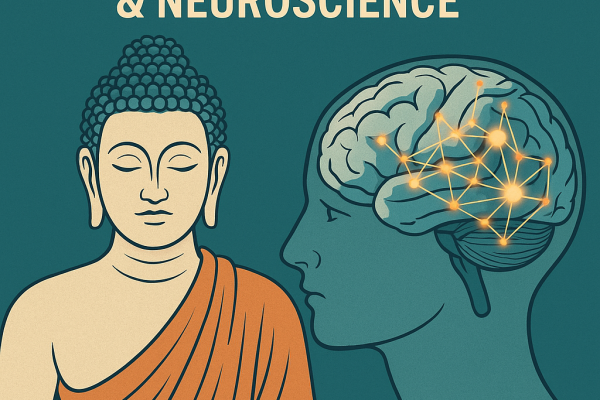
In the last few decades, scientists have begun to confirm what Buddhist monks and meditators have known for over 2,500 years:The mind can be trained. Suffering can be transformed. Awareness changes the brain. From Buddhist models of the mind like the Abhidhamma to the latest discoveries in neuroscience and mindfulness research, a powerful bridge is forming — offering new hope for healing trauma, depression, anxiety, and addiction. Let’s explore how Buddhist psychology and neuroscience are aligning in profound, life-changing ways. What Is Buddhist Psychology? Unlike Western psychology, which often focuses on diagnosing disorders and treating symptoms, Buddhist psychology is fundamentally ethical and experiential. It sees the mind not as a fixed thing, but as a dynamic process shaped by intention, perception, and karma. At its core, Buddhist psychology aims at liberation — freeing the mind from greed, hatred, and delusion through practices like mindfulness (sati), concentration (samadhi), and wisdom (paññā). The Abhidhamma: A Map of Consciousness The Abhidhamma Pitaka, one of the core texts in Theravāda Buddhism, offers a deep, analytical model of the mind. It breaks consciousness into: It categorizes emotions, thoughts, and mental habits with remarkable precision — long before modern psychology or neuroscience emerged. Today, cognitive science is beginning to mirror this complexity, using fMRI and neuroimaging to identify neural correlates of emotion, attention systems, and habit loops — echoing the Buddhist insight that the mind is conditioned, impermanent, and trainable. Neuroscience Meets Mindfulness In clinical and lab settings worldwide, Buddhist meditation practices are being studied for their powerful effects on the brain. The science is clear: Meditation for Trauma, Depression & Addiction Psychologists and neuroscientists are now using Buddhist-inspired techniques in treatments for: In all these cases, the emphasis is not just on symptom reduction — but on transforming one’s relationship to pain, emotion, and the self. Karma, Neuroplasticity & the Changing Brain A core idea in Buddhist psychology is that the mind is not static. We are what we repeatedly think and do. This aligns beautifully with the modern concept of neuroplasticity — the brain’s ability to rewire itself through repetition and intention. The Buddhist path is, in this sense, a science of mind: a step-by-step method for rewiring the brain toward compassion, clarity, and freedom. The Promise of Integration The convergence of Buddhism and neuroscience is not about merging belief systems, but about deepening our understanding of what it means to be human.Therapists, researchers, monks, and meditators are now co-creating a world where contemplative wisdom and cognitive science support one another — from hospitals to classrooms to meditation centers. This integration gives rise to: Final Thoughts: A Mindful Revolution As Buddhist psychology and neuroscience continue to evolve side by side, the message is hopeful and urgent:We can train the mind. We can reshape the brain. And we can heal — not just individually, but collectively. In a world grappling with mental health crises and digital overload, the ancient insights of the Buddha offer not just relief, but a radical path of inner transformation.

Read More

Nibbana (Nirvana): The Ultimate Goal in Buddhist Philosophy

Introduction Nibbana (Pali) or Nirvana (Sanskrit) is the ultimate goal of Buddhist practice. It represents the cessation of suffering (dukkha) and the end of the cycle of birth, death, and rebirth (samsara). Unlike many religious traditions that describe a heavenly abode or an afterlife, Nibbana is not a physical place but a profound experiential state. It signifies the complete eradication of desires, cravings, and attachments, leading to true liberation and peace. The Meaning and Interpretation of Nibbana The term “Nibbana” is derived from the root words ni (without) and vana (craving or attachment). Thus, it means “the state without craving.” The concept is often metaphorically described as the extinguishing of a flame, signifying the cessation of the fires of greed (lobha), hatred (dosa), and ignorance (moha). As explained in The Dhammapada, the Buddha taught that those who attain Nibbana transcend suffering and achieve unshakable peace. Nibbana is classified into two stages: Path to Nibbana: The Noble Eightfold Path The Buddha prescribed the Noble Eightfold Path as the practical means to attain Nibbana. This path consists of: This ethical and meditative path emphasizes moral conduct (sila), mental discipline (samadhi), and wisdom (panna), as elaborated in Majjhima Nikaya and Visuddhimagga. Differences Between Nibbana and Other Religious Concepts Buddhism’s emphasis on personal effort and ethical living contrasts with the ritualistic approach of the Vedic tradition, where sacrifices and prayers played a crucial role. The Buddha rejected the efficacy of rituals and external deities in achieving liberation, asserting that inner transformation was the key to ending suffering. Unlike the concept of moksha in Hinduism, which often involves uniting with Brahman, Nibbana is described as beyond conceptualization, as it is a state beyond existence and non-existence. In Udana 8:3, the Buddha states, “There is an unborn, uncreated, unconditioned state. If there were not this unborn, uncreated, unconditioned state, there would be no escape from the born, created, and conditioned.” The Buddha’s Experience of Nibbana At the age of 35, after years of ascetic practices and meditation, Siddhartha Gautama attained enlightenment under the Bodhi tree in Bodh Gaya. He realized the Four Noble Truths and saw the dependent origination (paticca-samuppada) of all phenomena. This moment marked his liberation from suffering and the attainment of Nibbana, as described in The Mahaparinibbana Sutta. Misconceptions About Nibbana Attaining Nibbana in Daily Life While ultimate Nibbana is the goal, practicing mindfulness, loving-kindness (metta), and detachment in everyday life can lead to partial experiences of peace and wisdom. Lay practitioners are encouraged to follow the Five Precepts and cultivate generosity (dana) and compassion. Conclusion Nibbana remains the highest spiritual goal in Buddhism, representing freedom from suffering and the cycle of birth and rebirth. It is achieved not through rituals but through wisdom, ethical living, and meditative discipline. As emphasized in The Sutta Nipata, “One who has gone beyond, who is free from sorrow, who has broken all bonds—this one is what I call a Brahmin.” By understanding and practicing the principles leading to Nibbana, individuals can move toward a life of clarity, compassion, and ultimate liberation.

Read More
Buddhism Most Asked Questions Answered

Curious Questions about Buddhism Answered

Buddhism, one of the world’s oldest spiritual traditions, continues to spark curiosity among millions seeking wisdom, peace, and enlightenment. From questions about Buddha’s origins to daily practices like diet, tattoos, and meditation, people often turn to Google for answers. To provide clarity, our experts have answered some of the most searched questions about Buddhism, drawing insights from authentic Buddhist scriptures such as the Pali Canon, Vinaya Pitaka, and Mahayana Sutras. Whether you’re exploring Buddhism for the first time or deepening your understanding, these expert-backed responses will guide you with accuracy and tradition. Can I be Buddhist if I’m white? Yes, Buddhism is a spiritual path open to all, regardless of race or ethnicity. The Buddha’s teachings focus on wisdom, compassion, and self-awareness, and anyone can follow them. Many Westerners have embraced Buddhism over the years. Reference: The Dhammapada, Theravāda Buddhism Texts How many hours did Buddha sleep? According to Buddhist scriptures, the Buddha slept for about 4 hours a night, from 10 PM to 2 AM. He dedicated the rest of his time to meditation and teaching. Reference: Vinaya Pitaka, Theravāda Canon Can you drink alcohol if you’re a Buddhist? Buddhism generally discourages alcohol consumption as it clouds the mind and hinders mindfulness. The Fifth Precept advises against intoxicants that lead to heedlessness. Reference: Sigalovada Sutta, Dīgha Nikāya Is it OK to keep a Sleeping Buddha at home? Yes, keeping a Sleeping Buddha statue at home is fine, as long as it is placed respectfully in a clean and elevated area. It symbolizes peace, enlightenment, and the transition to Nirvana. Reference: Buddhist Art and Iconography Texts What is unusual about a Buddhist marriage? Buddhist marriages are generally simple and secular. Buddhism does not prescribe specific rituals but emphasizes mutual respect, love, and understanding between partners. Many Buddhists seek blessings from monks rather than conducting religious ceremonies. Reference: Sigalovada Sutta, Dīgha Nikāya Can Buddhists have tattoos? Yes, Buddhists can have tattoos, and many choose sacred symbols or mantras. However, in some Buddhist cultures, tattooing sacred images (like the Buddha) on inappropriate body parts may be considered disrespectful. Reference: Theravāda & Mahāyāna Teachings on Respect Can Buddhists drink caffeine? Yes, Buddhists can drink caffeine. However, some monastic traditions may limit or avoid it to maintain mindfulness and avoid over-stimulation. Reference: Vinaya Pitaka, Monastic Rules Can Buddhists eat pork? It depends on the tradition. Theravāda monks traditionally eat whatever is offered, including pork, as long as the animal was not killed specifically for them. Many Mahāyāna Buddhists, especially in China and Vietnam, follow vegetarian diets. Reference: Jivaka Sutta, Anguttara Nikāya Is Buddha Chinese or Indian? The Buddha, Siddhartha Gautama, was born in Lumbini, present-day Nepal, and attained enlightenment in India. His teachings spread from India to China, Tibet, and other parts of Asia over centuries. Reference: Mahāparinibbāna Sutta, Theravāda Canon Are Buddhists Christians? No, Buddhism and Christianity are separate religions with different beliefs. Buddhism does not revolve around a creator god, while Christianity is centered on faith in God and Jesus Christ. However, some individuals appreciate and incorporate elements of both traditions in their personal spiritual journey. Reference: Buddhist-Christian Dialogue Texts What is the meaning of Baudh Dharma? “Baudh Dharma” (Buddhism) means the path of awakening or enlightenment, based on the teachings of the Buddha. It emphasizes wisdom, compassion, and liberation from suffering. Reference: The Four Noble Truths, Pali Canon What is Buddha’s religion? The Buddha did not follow an existing religion but taught a path to enlightenment based on personal experience. His teachings later became known as Buddhism. Reference: Dhammacakkappavattana Sutta, Pali Canon Which country is 100% Buddhist? No country is 100% Buddhist, but Bhutan and Cambodia have the highest percentages, with over 90% of their populations following Buddhism. Reference: Pew Research on Religious Demographics What are the 4 principles of Gautam Buddha? The Four Noble Truths form the core of Buddha’s teachings: Reference: Dhammacakkappavattana Sutta, Pali Canon Buddhism’s timeless wisdom continues to inspire curiosity and spiritual exploration worldwide. Through authentic scriptures and expert insights, we have addressed some of the most frequently asked questions, offering clarity on Buddhist beliefs, practices, and traditions. However, these are just a few of the many questions people seek answers to. For a more in-depth exploration, including additional queries on Buddhism, visit IBH Forum’s Most Asked Questions on Buddhism and deepen your understanding of this profound path to enlightenment.

Read More
NamoBudha Location in Nepal

NamoBuddha – Emerging International Tourist Destination

Namobudha stands as one of the venerable and ancient Buddhist sites, rivaled in sacredness only by Kathmandu’s Swayambhu and Boudha. Nestled in Nepal’s Kavrepalanchok District, about 50 km east of Kathmandu via the Banepa-Panauti route, this site is steeped in religious significance. Surrounded by tranquil environs and verdant hills, Namobudha is gaining prominence as a pivotal Buddhist pilgrimage destination. Additionally, it is increasingly drawing attention as a favored spot for tourists, both domestic and international, year after year. Among the rare events that have happened in the world, a prince sitting in the comfort of his palace gave self-sacrificed (benevolent compassion) to a starving wild animal, a tigress and her cubes. Prince Mahasattva, the youngest son of King Maharatha of Panchal (Panauti), has become one of its protagonists. Nepali Greatest Poet Lakshmi Prasad Devkota may have expressed his sentiments by delving into the lives of two princes, Mahasattva and Siddhartha Gautama. All are searching for happiness; where is that happiness!Give yourself to others where it belongs!! Prominent Poet Mr. Laxmi Prasad Devkota According to Jataka legend, in ancient times (about 6,000 years ago, during the Treta era?), King Maharatha established his capital in Panchal (Panauti) on the east side of present Kathmandu with a population of about 5,000. On the day of Kartik (October) full moon, the king, queen, and three princes, Mahadev, Mahaprasad, and Mahasattva accompanied by the court’s hunting party, went out for hunting in Hiranyagiri Gandhamadan mountain (currently Kusume community forest). One morning, three princes went together to hunt. As they were returning to the royal hunting camp in the evening after their hunt, they saw a thin and weak tigress and five newborn cubs at the foot of a tree in the forest, on the brink of death. The princes decided they would not hunt the weak tigress and her cubs, and quietly went back to the camp (residence). However, among them, Mahasattva, the youngest prince, felt compassion for those innocent creatures. Unfortunately, he could not express his feelings in front of his brothers. The younger prince went back to the tiger’s cave under the pretense of going to the toilet, while the two brothers went to the camp. Prince Mahasattva set aside his weapons, removed his clothes, and prostrated himself in front of tigress. The tigress did not harm the prince, either out of weakness or fear. Mahasattva offered his own body to the weakened hunger of the tigress and her five newborn cubs by cutting himself with a weapon, feeding them his blood and flesh,  ‘donating’ his life to sustain the lives of these hungry creatures, and thus attained enlightenment as a Bodhisattva. The royal families sat anxiously in the camp all night, awaiting the return of Prince Mahasattva. However, Prince Mahasattva did not return. The next morning, the members of the royal family ventured into the forest to search for the prince. A team found blood spots and human bones at the top of the dense forest. The king was informed of the findings. Everyone, including the king, gathered at the site where the bloodshed and bones were found. It was not difficult to deduce his death from the clothes, weapons, and ornaments found at the base of the tree. The courtiers, including Prince Mahasattva’s brothers, concluded that a hungry tigress and cubs had consumed the prince. However, the court astrologers asserted that the prince was no ordinary person; he had sacrificed himself to ‘save someone’s life’ and had attained the state of a Bodhisattva According to the advice of courtiers, priests, and astrologers, the remaining body of the prince, along with his clothes, weapons, and ornaments, was brought to the camp where queen Satyavati was staying. The prince’s jewels, weapons, and other funeral items were also taken from the palace. Near the campsite, a pit was dug properly, and the prince’s remaining remains, along with his weapons, jewelry, and clothes, were placed there. After the prince’s funeral, preparations were made to return to the palace, but the queen chose not to do so. With the queen’s decision to stay, both princes Mahadev and Mahaprasad remained with her. The king returned to the palace with the other troops, leaving some guards to take care of the queen and the princes. They stayed at the funeral site for a few months before the queen and the princes finally returned to the palace. After the death of her youngest son, the distraught queen could not stay in the palace. Witnessing her grief, the king abdicated the throne to Prince Mahadev, and the royal couple took retired life. Overwhelmed by memories of the prince, the parents went at their son attained enlightenment and reached the Kankamani (Sankheshwari River) Holy place at the edge of the forest. There, they meditated and renounced worldly life. In their memory, an open temple of the Shankheswari (Kirat regime style) has been established. According to the Swayambhu Purana, about 3500 years after Prince Mahasattva enlightened with Bodhisattva, Siddhartha Gautama Buddha visited Kathmandu during the reign of the seventh Kirati king, Jitedasti. During this visit, he traveled to the Hiranyagiri Gandhamadan Hill via Thimi, Bhaktapur, Nala, Panauti, Ite, and Shankheswari. There, he sat near the mausoleum where Prince Mahasattva was buried and meditated for a month. After his meditation, he circumambulated the mausoleum three times and humbly proclaimed, “न:म बुद्ध (Nama Buddha).” It is believed that from that day onwards, the tomb’s name was changed to “न:म बुद्ध”. The Newars of Kathmandu, Rosi Valley, and surrounding areas refer to this place as Nama (Namo) Buddha Namra/Namura Dhyo and simply as Namra/Namura. Recently, nearly everyone has adopted Namo Buddha and the municipality has been named with Namo Buddha Municipality. According to Kimbdanti (myth), a small chaitya was built on top of the Samadhi (mound) during the Kirat period to honor the great soul after the visit of Gautama Buddha. King Mandev I of the Lichchhavi period, being a follower of Buddhism, had made a stone idol of Princes Mahadev and Mahaprasad placed…

Read More

Buddhist Philosophers and Their Contributions to Buddhism

Buddhist philosophy is a multifaceted tradition with numerous philosophers who have significantly shaped its development over centuries. Here is an extended list of influential Buddhist philosophers and a brief overview of their contributions and philosophies. 1. Gautama Buddha (c. 563/480 – c. 483/400 BCE) Philosophy: Foundational Teachings of BuddhismContributions: The Buddha’s teachings form the core of all Buddhist philosophy. He articulated the Four Noble Truths, the Eightfold Path, and the concept of dependent origination (pratītyasamutpāda). His teachings emphasize the cessation of suffering (dukkha) through ethical conduct, meditation, and wisdom. Read More about Buddha here 2. Nagarjuna (2nd Century CE) Philosophy: Madhyamaka (Middle Way)Contributions: Nagarjuna founded the Madhyamaka school, emphasizing the concept of śūnyatā (emptiness) and the middle way between nihilism and eternalism. His “Mūlamadhyamakakārikā” (Fundamental Verses on the Middle Way) is a seminal text in Mahāyāna Buddhism. 3. Aryadeva (3rd Century CE) Philosophy: MadhyamakaContributions: Aryadeva, a disciple of Nagarjuna, wrote the “Catuḥśataka” (Four Hundred Verses), addressing metaphysical and ethical issues and refining the arguments for emptiness. 4. Asanga (4th Century CE) Philosophy: Yogācāra (Vijñānavāda)Contributions: Asanga, along with Vasubandhu, founded the Yogācāra school, focusing on the role of consciousness in the creation of experience. His works include the “Mahāyānasūtrālamkāra” and the “Yogācārabhūmi-śāstra.” 5. Vasubandhu (4th-5th Century CE) Philosophy: Yogācāra, AbhidharmaContributions: Vasubandhu contributed to both Yogācāra and Abhidharma traditions. His “Abhidharmakośa” is a comprehensive treatise on Abhidharma, and his Yogācāra works include the “Trisvabhāvanirdeśa” and “Viṃśatikā.” 6. Dignāga (5th-6th Century CE) Philosophy: Buddhist Logic and EpistemologyContributions: Dignāga founded the school of Buddhist logic and epistemology. His works, such as “Pramāṇasamuccaya,” laid the groundwork for later developments in Buddhist logic, focusing on perception and inference as valid means of knowledge. 7. Dharmakīrti (7th Century CE) Philosophy: Buddhist Epistemology and LogicContributions: Dharmakīrti systematized Buddhist logic and epistemology in works like “Pramāṇavārttika.” He analyzed perception, inference, and the nature of reality, influencing both Buddhist and non-Buddhist traditions. 8. Candrakīrti (7th Century CE) Philosophy: Prāsaṅgika-MadhyamakaContributions: Candrakīrti is a key figure in the Prāsaṅgika sub-school of Madhyamaka. His commentaries, especially the “Prasannapadā,” provide detailed expositions of Madhyamaka philosophy, emphasizing a dialectical method of refuting inherent existence. 9. Śāntideva (8th Century CE) Philosophy: Madhyamaka, EthicsContributions: Śāntideva’s “Bodhicaryāvatāra” (Guide to the Bodhisattva’s Way of Life) is a classic text on the path of the bodhisattva, blending Madhyamaka philosophy with practical ethical guidance and meditation techniques. 10. Kamalaśīla (8th Century CE) Philosophy: Yogācāra-Madhyamaka SynthesisContributions: Kamalaśīla synthesized Yogācāra and Madhyamaka philosophies in his “Bhāvanākrama” texts, outlining a comprehensive path of meditation. His works influenced Tibetan Buddhism, especially regarding enlightenment and meditation. 11. Śāntarakṣita (8th Century CE) Philosophy: Yogācāra-Madhyamaka SynthesisContributions: Śāntarakṣita played a pivotal role in bringing Buddhism to Tibet. His works, including the “Tattvasaṅgraha,” integrate Yogācāra and Madhyamaka philosophies and engage with non-Buddhist Indian philosophies. 12. Atisha (982-1054 CE) Philosophy: Lamrim (Stages of the Path)Contributions: Atisha’s “Bodhipathapradīpa” (Lamp for the Path to Enlightenment) systematized the Lamrim tradition, outlining a graduated path to enlightenment. His work significantly influenced the development of Tibetan Buddhism. 13. Tsongkhapa (1357-1419 CE) Philosophy: Gelug, Prāsaṅgika-MadhyamakaContributions: Tsongkhapa founded the Gelug school of Tibetan Buddhism and emphasized the Prāsaṅgika interpretation of Madhyamaka. His works, such as the “Lamrim Chenmo” (Great Treatise on the Stages of the Path), are central to Gelugpa thought. 14. Dōgen (1200-1253 CE) Philosophy: Sōtō ZenContributions: Dōgen founded the Sōtō school of Zen Buddhism in Japan. His writings, especially the “Shōbōgenzō” (Treasury of the True Dharma Eye), emphasize zazen (seated meditation) and the realization of enlightenment in everyday activities. 15. Hakuin Ekaku (1686-1769 CE) Philosophy: Rinzai ZenContributions: Hakuin revitalized the Rinzai school of Zen Buddhism in Japan. His emphasis on kōan practice and vigorous training methods significantly influenced the Rinzai tradition, stressing direct realization and experiential wisdom. Conclusion The contributions of these philosophers have profoundly shaped Buddhist thought, practice, and its evolution across different cultures and historical periods. Each philosopher’s unique insights and teachings continue to inspire practitioners and scholars, ensuring the enduring relevance and adaptability of Buddhist philosophy. Read about the Modern Buddhist Philosophers like Dr. B.R Ambedkar here.

Read More

Does Buddhism Believe in God?

Buddhism, a major world religion with deep philosophical roots, often prompts questions about its stance on the existence of God. Unlike many other religious traditions, Buddhism has a unique perspective on divinity and spirituality. Here, we explore whether Buddhism believes in God, how different sects view this concept, and the role of deities in Buddhist practice. The Concept of God in Buddhism Buddhism does not adhere to the concept of a single, omnipotent creator God as found in monotheistic religions like Christianity, Islam, or Judaism. Instead, it focuses on the individual’s journey toward enlightenment and the understanding of reality. The absence of a central god figure distinguishes Buddhism from many other religious systems. The Role of Deities While Buddhism does not believe in a supreme creator God, it acknowledges the existence of various deities, spirits, and supernatural beings. These entities are often seen in the context of cultural and regional beliefs rather than central religious doctrine. In many Buddhist traditions, especially Mahayana and Vajrayana, these deities are considered symbolic representations of various aspects of enlightenment and human qualities. The Buddha’s Perspective Siddhartha Gautama, the Buddha, did not deny or confirm the existence of gods. Instead, he emphasized that belief in gods is not essential for achieving enlightenment. The Buddha’s teachings focus on practical steps to end suffering and attain Nirvana through the Four Noble Truths and the Eightfold Path. His approach is pragmatic, prioritizing ethical conduct, mental discipline, and wisdom over theological speculation. Different Sects and Their Views Buddhism is not monolithic; it comprises several sects, each with its own interpretations and practices. Here’s a brief overview of how different Buddhist sects view the concept of God and deities: Theravada Buddhism Theravada Buddhism, the oldest school of Buddhism, is often called the “Teaching of the Elders.” It focuses strictly on the teachings of the historical Buddha and does not emphasize the worship of deities. Theravada practitioners aim for individual enlightenment through rigorous practice and adherence to the Buddha’s original teachings. Mahayana Buddhism Mahayana Buddhism, known as the “Great Vehicle,” includes a broader array of teachings and practices. It acknowledges the existence of numerous bodhisattvas (enlightened beings who help others achieve enlightenment) and deities. These figures are revered and venerated, but they are not seen as omnipotent gods. Instead, they symbolize various aspects of the enlightened mind and serve as inspirational guides. Vajrayana Buddhism Vajrayana Buddhism, or the “Diamond Vehicle,” is a branch of Mahayana that incorporates esoteric practices and rituals. It features a rich pantheon of deities, including tantric gods and goddesses, who represent different aspects of the cosmos and the enlightened state. These deities are integral to Vajrayana meditation practices and are used as aids in the practitioner’s spiritual journey. Conclusion Buddhism offers a distinctive perspective on divinity, emphasizing personal enlightenment and the understanding of reality over belief in a creator God. While it acknowledges the existence of various deities in different cultural contexts, these are not central to its teachings. The Buddha’s pragmatic approach encourages individuals to seek liberation from suffering through ethical living, mental discipline, and wisdom. As a result, Buddhism provides a path to spiritual awakening that is accessible to all, regardless of their belief in God.

Read More