What is the Dhammapada?
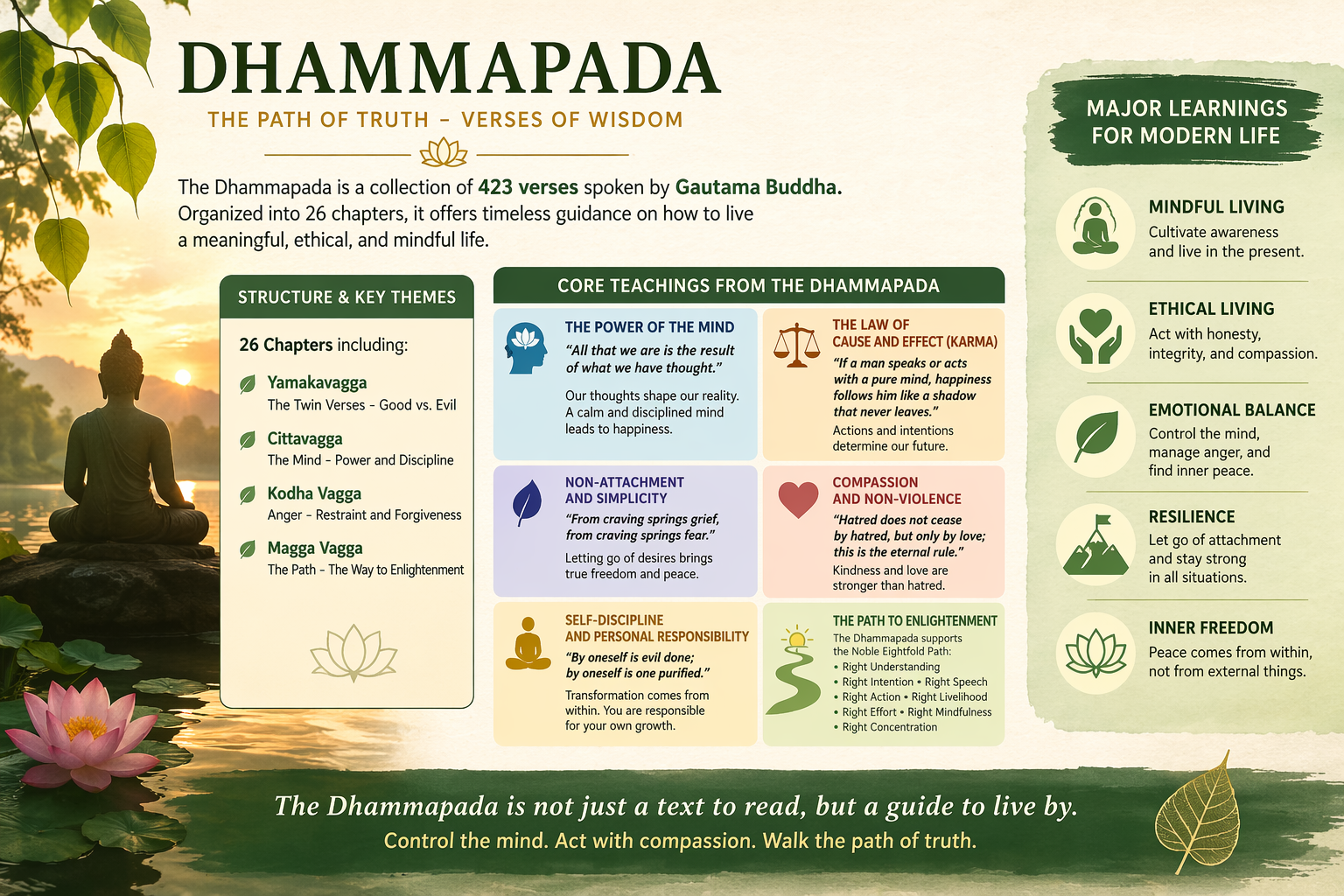
The Dhammapada consists of 423 verses organized into 26 chapters, each focusing on a specific theme such as the mind, wisdom, anger, happiness, and the path to enlightenment. The word “Dhammapada” can be translated as “the path of truth” or “verses of the law.”
These verses are not abstract philosophy—they are practical teachings meant for everyday life, guiding individuals toward inner peace and liberation (Nirvana).
Structure and Key Themes
Each chapter addresses a central idea. Some notable ones include:
- Yamakavagga (The Twin Verses) – contrasts good and evil
- Cittavagga (The Mind) – emphasizes mental discipline
- Kodha Vagga (Anger) – teaches restraint and forgiveness
- Magga Vagga (The Path) – outlines the path to enlightenment
Core Teachings from the Dhammapada
1. The Power of the Mind
One of the most famous verses highlights how everything begins with the mind:
“All that we are is the result of what we have thought.”
The Dhammapada teaches that our thoughts shape our reality. A disciplined mind leads to happiness, while an uncontrolled one leads to suffering.
2. The Law of Cause and Effect (Karma)
Actions have consequences—this is a foundational idea:
“If a man speaks or acts with a pure mind, happiness follows him like a shadow that never leaves.”
The emphasis is on ethical living, where intentions and actions determine future outcomes.
3. Non-Attachment and Simplicity
The text repeatedly stresses letting go of desires:
“From craving springs grief, from craving springs fear.”
Freedom comes not from acquiring more, but from releasing attachment.
4. Compassion and Non-Violence
A central moral teaching is kindness toward all beings:
“Hatred does not cease by hatred, but only by love; this is the eternal rule.”
This verse captures the essence of non-violence (Ahimsa) and forgiveness.
5. Self-Discipline and Personal Responsibility
The Dhammapada makes it clear that transformation is an individual effort:
“By oneself is evil done; by oneself is one purified.”
There is no external savior—self-awareness and discipline are key.
6. The Path to Enlightenment
The teachings align closely with the Noble Eightfold Path:
- Right understanding
- Right intention
- Right speech
- Right action
- Right livelihood
- Right effort
- Right mindfulness
- Right concentration
The Dhammapada reinforces these as practical steps toward liberation from suffering.
Major Learnings for Modern Life
Even today, the Dhammapada remains deeply relevant:
- Mental health: It emphasizes mindfulness and emotional control
- Ethics: Encourages integrity, honesty, and compassion
- Resilience: Teaches detachment from external outcomes
- Inner peace: Shows that peace comes from within, not outside
Why the Dhammapada Matters
Unlike complex philosophical treatises, the Dhammapada speaks in simple yet profound verses. Its teachings cut across cultures and religions, offering universal insights into:
- Human suffering
- The nature of happiness
- The importance of awareness
- The path to inner freedom
Final Reflection
The Dhammapada is not just a religious text—it’s a manual for living wisely. Its enduring appeal lies in its clarity: control the mind, act with compassion, and seek truth within.