HH Dalai Lama

What Does Tibetan Buddhism Believe?

Tibetan Buddhism, also known as Vajrayana Buddhism, is a unique and intricate form of Buddhism that combines elements of Mahayana Buddhism with various tantric and shamanistic practices native to the Himalayan region. It is widely practiced in Tibet, Bhutan, Nepal, India, Mongolia, and parts of Russia. Tibetan Buddhism is renowned for its rich rituals, profound philosophical texts, and an emphasis on the path to enlightenment through both wisdom and compassion. Core Beliefs and Practices 1. The Four Noble Truths and the Eightfold PathLike all Buddhist traditions, Tibetan Buddhism is rooted in the Four Noble Truths and the Eightfold Path. These foundational teachings outline the nature of suffering, its causes, the possibility of cessation, and the path leading to the cessation of suffering. 2. The Bodhisattva IdealTibetan Buddhism places a strong emphasis on the bodhisattva path, wherein practitioners aspire to achieve enlightenment not just for themselves but for the benefit of all sentient beings. This involves cultivating qualities such as compassion (karuna) and loving-kindness (metta). Tantric Practices One of the defining features of Tibetan Buddhism is its extensive use of tantra, which includes advanced meditation techniques, rituals, and esoteric practices. Tantric practices aim to transform ordinary experiences into opportunities for spiritual growth. Key elements include: The Role of Lamas and Tulkus Lamas: Tibetan Buddhism places great importance on spiritual teachers known as lamas. They provide guidance, perform rituals, and transmit teachings. The most renowned lama is the Dalai Lama, considered the spiritual leader of Tibetan Buddhism. Tulkus: Another unique aspect of Tibetan Buddhism is the belief in tulkus, or reincarnated lamas. High-ranking lamas, upon their death, are believed to reincarnate and are sought out through a meticulous process. The Dalai Lama and the Panchen Lama are among the most famous tulkus. Rituals and Festivals Tibetan Buddhism is rich in cultural and religious festivals that reflect its spiritual beliefs and practices. These festivals often involve elaborate rituals, prayers, dances, and communal activities that mark significant events in the Buddhist calendar. Here are some key Tibetan Buddhist festivals: Losar (Tibetan New Year) Losar is the most significant festival in Tibetan Buddhism, celebrating the Tibetan New Year. It usually falls in February or March and lasts for 15 days, with the first three days being the most important. The festival involves various customs such as cleaning homes, preparing special foods, performing rituals to drive away evil spirits, and visiting monasteries to offer prayers and receive blessings. 2. Monlam (The Great Prayer Festival) Monlam Chenmo is one of the grandest festivals, established by Tsongkhapa, the founder of the Gelug school of Tibetan Buddhism. Held in the first month of the Tibetan calendar, Monlam includes extensive prayer sessions, teachings, and debates by monks, aiming for world peace and spiritual prosperity. The festival culminates with rituals and public displays of intricate butter sculptures called torma. 3. Saga Dawa Saga Dawa is the celebration of the Buddha’s birth, enlightenment, and parinirvana (passing away). It occurs on the full moon day of the fourth lunar month. Buddhists engage in various meritorious activities, such as fasting, reciting sutras, making offerings, and releasing animals. Pilgrims visit sacred sites, including Mount Kailash, to perform circumambulations and offer prayers. 4. Chotrul Duchen (Festival of Butter Lamps) Chotrul Duchen, also known as the Festival of Butter Lamps, takes place on the 15th day of the first month of the Tibetan calendar. It commemorates the Buddha’s performance of miracles to increase the faith of his disciples. Monasteries and homes are illuminated with thousands of butter lamps, symbolizing the light of wisdom dispelling the darkness of ignorance. 5. Lhabab Duchen Lhabab Duchen celebrates the Buddha’s descent from the Tushita heaven back to Earth, after teaching his mother and other celestial beings. This festival is observed on the 22nd day of the ninth lunar month. It involves making offerings, lighting lamps, and performing various rituals to honor the Buddha’s return and spread of his teachings. 6. Ganden Ngamchoe Ganden Ngamchoe marks the death anniversary of Je Tsongkhapa, the founder of the Gelug tradition. Celebrated on the 25th day of the 10th lunar month, the festival includes lamp offerings, prayers, and the recitation of Tsongkhapa’s works. Monks and laypeople gather to honor his contributions to Tibetan Buddhism. 7. Dzamling Chisang (Universal Prayer Day) Dzamling Chisang is a festival of universal prayer and offerings, held on the 15th day of the fifth lunar month. It commemorates the great saint Guru Rinpoche’s subjugation of negative forces and establishment of Buddhism in Tibet. Pilgrims visit sacred sites, make offerings, and perform rituals to invoke the blessings of Guru Rinpoche. 8. Shoton Festival (Yogurt Festival) Shoton Festival originally began as a monastic retreat during which monks consumed only yogurt. Today, it is a major cultural event held in Lhasa, involving Tibetan opera performances, music, and dance. The festival starts on the 30th day of the sixth lunar month with the unfurling of a giant thangka (religious painting) at Drepung Monastery, followed by festivities at Norbulingka Palace. 9. Thangka Unveiling Ceremony Several festivals feature the unveiling of giant thangkas (religious paintings), which are displayed to convey blessings and teachings. Notable ceremonies include those during the Monlam Great Prayer Festival and the Shoton Festival. These events draw large crowds of pilgrims and tourists who come to view the thangkas and participate in the associated rituals. 10. Palden Lhamo Festival Palden Lhamo Festival is dedicated to Palden Lhamo, a fierce female protector deity of Tibetan Buddhism. Celebrated on the 15th day of the ninth lunar month, the festival includes rituals and prayers to invoke her protection and blessings. Monasteries hold special ceremonies, and devotees offer prayers and perform rituals to honor her. Tibetan Buddhist festivals are vibrant expressions of spiritual devotion, community solidarity, and cultural heritage. They provide opportunities for practitioners to accumulate merit, deepen their practice, and celebrate the teachings of Buddhism. These festivals, marked by elaborate rituals, prayers, and communal activities, play a crucial role in preserving and promoting the rich traditions of Tibetan Buddhism. Essential Books to Understand Tibetan Buddhism These…
Read More
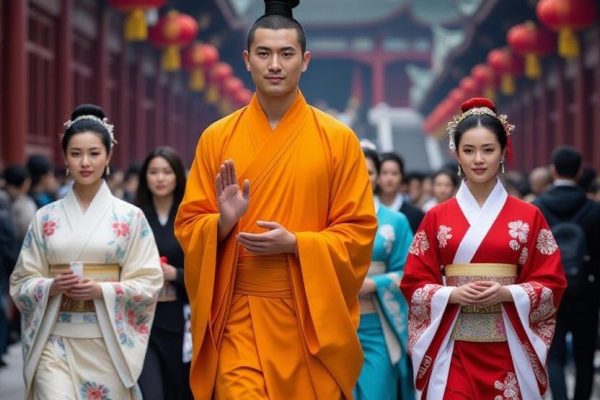
Devotees in China bow before the Buddha, honoring the timeless wisdom that journeyed from India to the Middle Kingdom.

From the Ganges to the Great Wall – How India Gifted Buddhism to China

India, the land where Prince Siddhartha attained enlightenment beneath the Bodhi tree in Bodh Gaya, became the cradle of Buddhism. What began as a spiritual movement in the heart of the Ganges valley did not remain bound by India’s borders. It crossed mountains, deserts, and empires, and one of its greatest journeys was to the civilization of China. India: The Birthplace of Buddhism Around the 6th century BCE, Gautama Buddha’s teachings of compassion, non-violence, and liberation from suffering resonated deeply with the people of India. Over centuries, Buddhist monasteries such as Nalanda and Vikramashila blossomed into global universities. Pilgrims, scholars, and monks flocked to India to absorb wisdom directly from its source. Carried on the Silk Road The fabled Silk Road did more than move silk and spices. It became the pathway of ideas. Indian monks traveled alongside merchants, carrying with them palm-leaf manuscripts of Buddhist sutras. Caravans crossing Central Asia became moving libraries of India’s spiritual heritage, eventually reaching Chinese cities like Luoyang and Chang’an. India’s Monks, China’s Awakening Brave Indian monks like Lokaksema and later Kumarajiva dedicated their lives to translating Sanskrit texts into Chinese. With each translation, Indian philosophy seeped into Chinese thought, sparking curiosity, devotion, and eventually transformation. Chinese rulers, intrigued by the moral depth of Buddhism, welcomed Indian teachers at their courts and built monasteries under imperial patronage.f Pilgrimage in Reverse The story didn’t end with India sending wisdom eastward. Inspired Chinese pilgrims like Faxian and Xuanzang traveled to India, retracing the footsteps of the Buddha. They studied at Nalanda, carried home scriptures, and helped weave an unbreakable cultural bridge between the two nations. Ironically, many Buddhist texts preserved in China today might have been lost forever in India without their efforts. How China Followed India’s Path China absorbed Buddhism but gave it a new life. Indian meditation practices mingled with Daoist philosophy, producing unique Chinese schools like Chan Buddhism (later Zen in Japan). Yet at its heart, Chinese Buddhism always bowed to the wisdom that flowed from India—the sacred flame lit beneath the Bodhi tree. Conclusion India gave China more than a philosophy—it gave it a path of peace, compassion, and inner awakening. From the Ganges to the Great Wall, Buddhism’s journey stands as a shining reminder of how India’s spiritual gift reshaped civilizations and continues to inspire millions even today.

Read More

Dhanyakataka: A Prominent Buddhist Center

Location of Dhanyakataka:Dhanyakataka, also known as Amaravati, was an ancient city located in present-day Andhra Pradesh, India. It was a significant cultural and religious center, especially during the early centuries of Buddhism. The site lies on the banks of the Krishna River, making it a strategic location for trade, pilgrimage, and spiritual activities. Significance as a Buddhist Center:Dhanyakataka flourished as a major Buddhist hub, particularly under the Mahasanghikas, an influential school of early Buddhism. The city became renowned for its association with the development of Mahayana Buddhism and the propagation of Buddhist teachings. The Amaravati Stupa, constructed in Dhanyakataka, was one of the earliest and largest stupas in India. This grand monument, adorned with intricate carvings and relief panels, depicted various aspects of the Buddha’s life and Buddhist philosophy, marking the region’s profound contribution to Buddhist art and architecture. Historical Influence:From around the 2nd century BCE, Dhanyakataka served as a crucial center for Buddhist teachings, drawing scholars, monks, and pilgrims from different parts of India and beyond. The site witnessed royal patronage, especially from the Satavahana dynasty, which played a vital role in supporting and expanding Buddhist institutions. This era saw the development of monasteries, viharas, and stupas, further solidifying Dhanyakataka’s status as a hub of Buddhist learning and spirituality. The city’s prominence declined over time due to socio-political changes and the gradual rise of Hinduism in the region. However, its legacy endures through archaeological findings and the continued reverence of Amaravati as a historical and religious landmark. Thus, given its historical and geographical significance, Dhanyakataka, located in Andhra Pradesh, remains an essential part of India’s Buddhist heritage.

Read More

Gyalo Thondup, Dalai Lama’s older brother, dies aged 97

A Nation in Mourning: The Passing of a Tibetan Icon In the serene town of Kalimpong, a profound silence has fallen upon the Tibetan community. Gyalo Thondup, the elder brother of His Holiness the 14th Dalai Lama and a monumental figure in the Tibetan struggle, has passed away at the age of 97. His departure marks the end of an era, leaving behind a legacy of unwavering dedication, sacrifice, and hope for his homeland. Humble Beginnings: From a Small Village to the Global Stage Born in 1928 in the quaint village of Taktser in Amdo, Tibet, Gyalo Thondup’s journey was extraordinary. While his younger brother was recognized as the reincarnation of the 13th Dalai Lama, he was entrusted with a secular path—one that would make him a vital force in the Tibetan cause. A Life Shaped by Global Experiences Venturing beyond Tibet, Gyalo Thondup immersed himself in the politics and cultures of China, India, Taiwan, and the United States. These experiences gave him a deep understanding of diplomacy, making him an indispensable bridge between Tibet and the world. The 1959 Escape: A Mission That Changed History History will forever remember Gyalo Thondup’s critical role in orchestrating the Dalai Lama’s escape to India in 1959. His courage ensured the survival of Tibet’s spiritual leadership and cultural heritage. He often described this as the most significant achievement of his life. A Diplomat and Strategist for Tibet’s Freedom Throughout his life, Gyalo Thondup played multiple roles—diplomat, strategist, and visionary. He worked tirelessly to garner international support for Tibet, addressing the United Nations and securing resolutions advocating for Tibetan human rights. Seeking Peace Through Dialogue In 1979, he initiated talks with Chinese leader Deng Xiaoping, striving for a peaceful resolution to Tibet’s struggle. His unwavering belief in dialogue over conflict laid the groundwork for future negotiations. An Unfulfilled Dream: Returning to Tibet Despite his relentless efforts, Gyalo Thondup’s greatest dream—to return to a free Tibet with his brother—remained unfulfilled. The Dalai Lama once told him, “We have to return home together,” a poignant wish that now echoes in the hearts of Tibetans worldwide. A Legacy That Inspires Generations Gyalo Thondup’s passing is not just a loss for Tibetans but for all who value justice, freedom, and cultural preservation. His life stands as a testament to resilience, diplomacy, and unwavering hope. Carrying Forward His Vision As we bid farewell to this extraordinary leader, we must continue his work and keep the vision of a free and peaceful Tibet alive. His legacy serves as a guiding light, inspiring future generations to fight for justice and preserve their heritage.

Read More
Laughing Buddha and Indian Connection

The Laughing Buddha: Exploring Its Indian Roots and Evolution

The Laughing Buddha, also known for his iconic image of a jovial, bald monk with a round belly and beaming smile, is instantly recognizable worldwide. Although most commonly associated with East Asia, his deeper spiritual and historical roots trace back to Indian Buddhism. Understanding the Indian connection to this widely cherished figure helps clarify how Buddhism, evolving across cultural contexts, transformed over time. The Historical Buddha and Indian Buddhism To understand the Laughing Buddha, it’s essential to begin with the historical Buddha, Siddhartha Gautama, also known as Shakyamuni Buddha. Born in ancient India around 500 BCE, Siddhartha’s life, teachings, and path to enlightenment are at the heart of Buddhist tradition. Indian depictions of the Buddha typically show him as a slim figure with a serene expression, tightly coiled hair, and wearing simple monastic robes. These representations emphasize his spiritual journey, his renunciation of worldly pleasures, and his disciplined life as a seeker of truth. Unlike the Laughing Buddha, the historical Buddha’s iconography reflects detachment from material wealth and focus on spiritual enlightenment. The Future Buddha: Maitreya The Indian origins of the Laughing Buddha can be traced to the figure of Maitreya, a bodhisattva regarded as the future Buddha. In Mahayana Buddhism, particularly prominent in India before it spread to other parts of Asia, Maitreya was prophesied to arrive on Earth in the future to achieve enlightenment and bring salvation to the world. Maitreya’s depiction was often more approachable than the solemn Shakyamuni, characterized by compassion, kindness, and a sense of hope for a brighter, more prosperous future. While the Laughing Buddha may seem vastly different from the historical Buddha, the connection lies in this idea of a future, joyful Buddha—Maitreya—who would embody abundance and good fortune for all sentient beings. The evolution of this figure into the Laughing Buddha we know today took place as Buddhism spread from India to China, Korea, Japan, and eventually to the rest of the world. Transformation in China: From Maitreya to Budai The transformation from Maitreya to the Laughing Buddha took a significant turn in China during the 10th century. There, a Zen monk named Budai (Chinese for “Cloth Bag”) emerged. Known for his eccentric personality and carefree demeanor, Budai traveled from village to village carrying a large cloth bag filled with treasures, which he distributed freely, particularly to children. His rotund belly and laughing face became symbolic of generosity, joy, and the abundance of life. Over time, Chinese Buddhists began associating Budai with Maitreya. His joyful, generous spirit was seen as an earthly manifestation of the future Buddha who would bring happiness and wealth to the world. The figure of Budai, depicted with a large belly and surrounded by children or animals, thus became a widespread and beloved symbol across East Asia, evolving into what the world now knows as the Laughing Buddha. Indian Influences in the Symbolism of the Laughing Buddha Despite Budai’s rise to prominence in China, the core concepts he symbolizes—abundance, wealth, and prosperity—are deeply rooted in Indian philosophy. In Indian spiritual traditions, particularly Hinduism and Buddhism, prosperity is not merely material but also tied to spiritual abundance and contentment. The Laughing Buddha’s large belly is a powerful symbol of this fullness of life, reflecting ancient Indian ideals that equate generosity with wealth, and joy with spiritual fulfillment. Furthermore, the Indian notion of the bodhisattva—a being who postpones nirvana to help others—finds resonance in the Laughing Buddha’s depiction as Maitreya. This deep-rooted Indian idea of compassion and future salvation through the bodhisattva is a direct link to Maitreya’s, and thus the Laughing Buddha’s, significance in East Asia. The Spread of the Laughing Buddha in the West While the Laughing Buddha’s connection to Indian Buddhism often goes unacknowledged in popular culture, his journey from India to China and eventually the West reflects the global spread of Buddhist ideas. As Japanese Zen Buddhism gained popularity in the 19th and 20th centuries, the Laughing Buddha became a widely recognized symbol, adorning homes, businesses, and restaurants worldwide. His image conveys good fortune, positivity, and light-hearted joy—a far cry from the solemn depictions of the historical Buddha. The Laughing Buddha Today: A Symbol Beyond Borders In modern times, the Laughing Buddha has transcended his religious origins to become a secular icon of good luck and happiness. Yet, understanding his Indian roots and the philosophical journey from Maitreya to Budai offers a richer appreciation of how Buddhist teachings adapt across cultures. The Laughing Buddha’s chubby, smiling figure reminds us that spiritual fulfillment can come in many forms—sometimes, as in the case of the Laughing Buddha, in the form of laughter and joy. Ultimately, while the Laughing Buddha might not resemble the meditative, serene figure of the historical Shakyamuni Buddha, his connection to Maitreya and the idea of future spiritual abundance ties him back to the original Indian context of Buddhism. His global journey, from Indian prophecy to Chinese folklore, and finally to Western pop culture, is a testament to Buddhism’s adaptability and the universal appeal of its teachings. What is the Laughing Buddha for? The Laughing Buddha is widely seen as a symbol of happiness, prosperity, and good fortune. Often associated with abundance and generosity, his joyful appearance represents the ideals of contentment and spiritual fulfillment. In homes and businesses, placing a Laughing Buddha statue is believed to bring positive energy, wealth, and success. He is also a symbol of spreading joy, encouraging people to live with kindness, compassion, and gratitude. Is it OK to buy a Laughing Buddha? Yes, it is perfectly fine to buy a Laughing Buddha statue. In fact, many people purchase Laughing Buddha statues as a symbol of good luck, wealth, and happiness. Whether for personal use or as a gift, the Laughing Buddha is regarded as a positive figure that brings joyful energy into a space. However, it’s important to treat the statue with respect, as it represents spiritual and cultural traditions tied to Buddhism. What is the real story of Laughing Buddha? The Laughing Buddha’s story blends Indian and…

Read More

The First Sermon at Sarnath: The Dhammacakkappavattana Sutta

The Buddha’s first sermon at Sarnath, known as the Dhammacakkappavattana Sutta, is not just a historical moment in the life of the Buddha—it’s a timeless guide for anyone seeking clarity, purpose, and peace in life. Delivered in the serene surroundings of the Deer Park, this sermon laid the foundation for a spiritual journey that millions have embarked upon over the centuries. But why is it so crucial for us to understand this discourse today? Understanding the Dhammacakkappavattana Sutta helps us to: Provide a Path to Liberation: While the sermon may not offer instant solutions to life’s challenges, it provides a path—a way of living and understanding—that can lead to liberation from suffering over time. Cultivate Inner Peace: The teachings guide us towards finding peace within ourselves, even amidst external chaos. They remind us that true peace is not about escaping problems but about transforming our relationship with them. Enhance Mindful Living: The sermon encourages mindfulness—a way of being present in each moment. This practice can significantly reduce stress and increase our overall well-being by helping us respond to situations with clarity rather than reacting impulsively. Develop Compassion and Wisdom: The Buddha’s words inspire us to cultivate compassion for ourselves and others. They remind us that wisdom is not merely intellectual knowledge but the deep understanding that leads to compassionate action. The Relevance Today Today, more than ever, people are searching for meaning and purpose in their lives. The first sermon at Sarnath offers a beacon of light, guiding us towards a more profound understanding of ourselves and the world around us. It encourages us to look beyond the surface and explore the deeper truths that govern our existence. By engaging with these teachings, we can begin to experience a shift in our perception and approach to life, leading us toward a path of greater peace, understanding, and fulfillment. To delve deeper into the teachings of this transformative sermon, I highly recommend watching this insightful video that further explores the Buddha’s first sermon:

Read More

Ashoka Converted to Buddhism Before the Kalinga War!!

The tale of Ashoka, the third emperor of the Mauryan dynasty, is often narrated as a journey from ruthless conquest to enlightened pacifism. However, a closer inspection of historical evidence suggests that Ashoka’s conversion to Buddhism predates the Kalinga war by several years. This article delves into the nuances of Ashoka’s conversion, challenging the popular narrative and exploring the political and personal motivations behind this significant transformation. The Traditional Narrative The traditional story of Ashoka’s conversion to Buddhism is deeply ingrained in historical texts and popular culture. According to this account, Ashoka’s transformation began after the brutal Kalinga war in 262 BCE. Horrified by the immense loss of life and suffering, Ashoka is said to have renounced violence and embraced Buddhism, dedicating his reign to the propagation of the Dharma (Buddhist teachings) and non-violence. However, this narrative, largely derived from Ashoka’s own edicts and later Buddhist texts, oversimplifies the complex interplay of personal, political, and religious factors that influenced Ashoka’s conversion. Evidence of Early Conversion Contrary to the traditional narrative, inscriptions and historical records indicate that Ashoka’s conversion to Buddhism occurred at least two years before the Kalinga war. Minor rock edicts found in various parts of India reveal that Ashoka had already adopted Buddhism around 264 BCE. These inscriptions, which predate the Kalinga war, mention Ashoka’s commitment to spreading the Buddhist faith and living according to its principles. Furthermore, Ashoka’s interactions with the Buddhist community began long before his official conversion. Historical records suggest that Ashoka had been associated with Buddhist monks and scholars for nearly a decade prior to the war. This long-standing relationship with Buddhism points to a gradual, rather than sudden, conversion influenced by both spiritual and pragmatic considerations. Political Motivations Ashoka’s conversion to Buddhism was not merely a spiritual awakening but also a strategic political move. The Mauryan empire, founded by Ashoka’s grandfather Chandragupta and expanded by his father Bindusara, was a vast and diverse entity, encompassing various cultures, religions, and languages. In such a heterogeneous empire, religious affiliation could be a powerful tool for political consolidation and legitimacy. At the time of Ashoka’s ascension to the throne, the Mauryan empire was marked by internal strife and rebellion. Ashoka’s half-brothers, particularly the crown prince Sushima, posed significant threats to his claim to power. Aligning with the Buddhists, who were gaining influence and had a significant following, provided Ashoka with a reliable support base against his rivals, particularly those aligned with the Jains and Ajivikas. Moreover, Buddhism’s emphasis on non-violence, moral governance, and social welfare resonated with Ashoka’s vision of a stable and harmonious empire. By adopting Buddhism, Ashoka could present himself as a benevolent ruler committed to the well-being of his subjects, thereby strengthening his authority and unifying his diverse realm. The Kalinga War and Ashoka’s Propaganda While the Kalinga war was a pivotal event in Ashoka’s reign, it was not the catalyst for his conversion to Buddhism. Instead, the war and its aftermath served as a powerful propaganda tool to reinforce his Buddhist identity and moral authority. Ashoka’s inscriptions, particularly the Major Rock Edicts, depict his remorse over the war’s brutality and his subsequent commitment to Dharma. However, these edicts were strategically placed in regions far from Kalinga, such as Shahbazgarhi in north-western Pakistan, and often omitted any expression of remorse in inscriptions found within Odisha (ancient Kalinga). This selective messaging suggests that Ashoka’s declarations of regret were intended more for political effect than genuine repentance, aimed at consolidating his rule and projecting an image of a just and compassionate emperor. Continued Acts of Violence Despite his professed commitment to non-violence, Ashoka’s reign was not devoid of brutality as the popular belief. Buddhist texts, such as the Ashoka-vadana, recount episodes of killings, particularly against the Ajivikas and Jains. These accounts, if true, challenge the portrayal of Ashoka as a wholly transformed pacifist and suggest a more complex and pragmatic approach to governance. Ashoka’s actions against rival sects and dissenters reveal a ruler who, while influenced by Buddhist teachings, did not entirely abandon the use of force to maintain control and eliminate threats to his authority. This duality underscores the pragmatic dimensions of his conversion and rule, blending spiritual ideals with political expediency. Conclusion The story of Ashoka’s conversion to Buddhism is a testament to the intricate interplay of faith, power, and politics in ancient India. Far from a sudden transformation triggered by the horrors of the Kalinga war, Ashoka’s adoption of Buddhism was a gradual process influenced by both personal conviction and strategic considerations. Understanding this nuanced narrative challenges the simplistic dichotomy of Ashoka the Cruel and Ashoka the Great, revealing a multifaceted ruler who navigated the complexities of empire with a blend of spiritual commitment and political acumen. As we reevaluate Ashoka’s legacy, it is essential to recognize the depth and diversity of factors that shaped his remarkable reign and enduring impact on Indian history and Buddhism. References :

Read More