adminForum

The spiritual jewel of Ladakh

Beyond the Himalayas The Enduring Significance of Buddhism in Ladakh

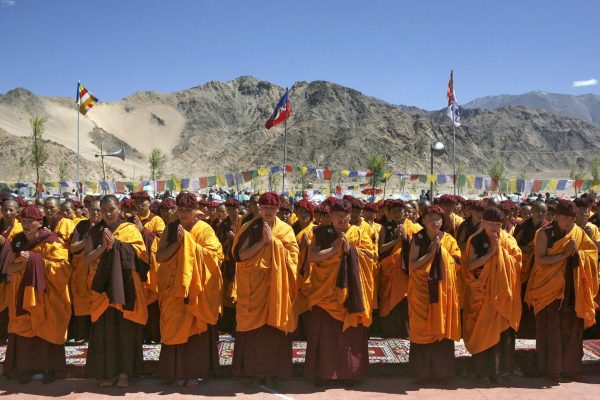
By Indo Buddhist Heritage Forum Nestled in the northernmost region of India, Ladakh is often called the “Land of High Passes.” Surrounded by the majestic Himalayas and characterized by rugged mountains, clear blue skies, and barren landscapes, Ladakh is not only famous for its natural beauty but also for its deep spiritual heritage. Buddhism plays a central role in the life, culture, and identity of the people of Ladakh. For centuries, it has shaped the traditions, art, architecture, festivals, and daily practices of the region. The significance of Buddhism in Ladakh extends beyond religion; it is the foundation of social harmony, cultural preservation, and spiritual guidance. Historical Background of Buddhism in Ladakh Buddhism reached Ladakh around the 2nd century through trade routes connecting India, Tibet, and Central Asia. However, it flourished significantly during the 10th century under the influence of Tibetan Buddhism. Ladakh became an important center of Mahayana Buddhism, especially the Vajrayana tradition. The spread of Buddhism in Ladakh was encouraged by rulers who built monasteries, promoted Buddhist teachings, and supported monks. Over time, monasteries became centers of education, spirituality, and administration. Even today, Buddhism remains deeply rooted in the region’s identity and continues to influence every aspect of life. Monasteries: Centers of Spiritual and Cultural Life One of the most visible symbols of Buddhism in Ladakh is its monasteries, locally known as gompas. Famous monasteries such as Hemis Monastery, Thiksey Monastery, and Diskit Monastery are not only places of worship but also important cultural institutions. These monasteries preserve ancient Buddhist scriptures, paintings, sculptures, and rituals. Monks living in these monasteries dedicate their lives to meditation, prayer, and the study of Buddhist philosophy. The monasteries also serve as educational centers where young monks learn literature, philosophy, and moral values. Many monasteries are built on hilltops overlooking valleys, symbolizing spiritual elevation and peace. Their architecture, colorful murals, prayer wheels, and giant statues of Buddha attract pilgrims and tourists from around the world. Influence on Culture and Traditions Buddhism strongly influences the customs and traditions of Ladakhi society. The teachings of compassion, non-violence, humility, and respect for all living beings guide people in their daily lives. The Buddhist way of life encourages harmony with nature and peaceful coexistence among communities. Traditional festivals in Ladakh are deeply connected with Buddhism. Festivals such as the Hemis Festival and Losar (Tibetan New Year) are celebrated with devotion and enthusiasm. During these festivals, monks perform sacred mask dances called Cham dances, which symbolize the victory of good over evil. Buddhist prayers, chanting, prayer flags, and stupas are common sights throughout Ladakh. These practices reflect the spiritual atmosphere of the region and strengthen community bonds. Buddhism and Art in Ladakh Buddhism has greatly contributed to the artistic heritage of Ladakh. Monasteries contain beautiful wall paintings, thangka paintings, wood carvings, and statues that depict the life of Buddha and Buddhist teachings. These artworks are not merely decorative; they serve educational and spiritual purposes. The influence of Tibetan Buddhist art is clearly visible in Ladakh’s architecture and paintings. The use of bright colors, intricate designs, and symbolic images reflects the rich spiritual traditions of the region. Local music, dance, and literature are also inspired by Buddhist beliefs. Religious songs and rituals are performed during ceremonies and festivals, preserving ancient traditions across generations. Role in Tourism and Economy Buddhism has also contributed significantly to the tourism industry in Ladakh. Thousands of tourists visit the region every year to experience its monasteries, festivals, and spiritual atmosphere. Buddhist heritage tourism has become an important source of income for local communities. Visitors are drawn to the peaceful environment of monasteries and the opportunity to learn meditation and Buddhist philosophy. As a result, Buddhism not only preserves cultural identity but also supports economic development in the region. Buddhism and Environmental Harmony One of the most important teachings of Buddhism is respect for nature and all forms of life. In Ladakh, where the environment is fragile and resources are limited, Buddhist values encourage sustainable living. People traditionally avoid wastefulness and maintain a balanced relationship with nature. Prayer flags fluttering across mountains and rivers symbolize prayers for peace, compassion, and environmental harmony. Buddhist teachings inspire communities to protect their surroundings and live simple, mindful lives. Conclusion Buddhism is the heart and soul of Ladakh. It has shaped the region’s history, culture, traditions, art, and social values for centuries. The monasteries, festivals, and spiritual practices of Ladakh reflect a deep connection between religion and everyday life. Beyond its religious importance, Buddhism promotes peace, compassion, environmental awareness, and cultural unity. In a rapidly changing modern world, Buddhism continues to preserve the unique identity of Ladakh and offers valuable lessons of harmony, simplicity, and spiritual wisdom to humanity.

Read More

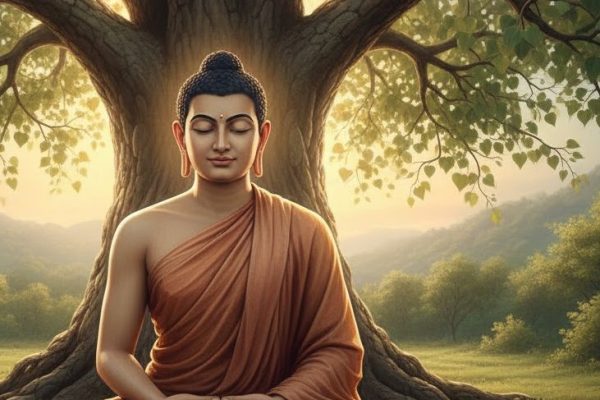
Buddhism Preservation A Shared Global Responsibility

Preserving Buddhism in India and Across the World Buddhism, one of the world’s oldest spiritual traditions, has faced periods of decline, especially in India where it originated. Over time, social changes, invasions, and the rise of other traditions led to a reduction in its influence. However, the need today is not just revival, but active preservation of Buddhist teachings and values both in India and globally. Historical Efforts to Protect Buddhism In ancient times, leaders like Ashoka played a crucial role in spreading and safeguarding Buddhism. He promoted teachings of compassion, nonviolence, and moral living across his empire and beyond. In modern history, B. R. Ambedkar revived Buddhism in India through Neo Buddhism, encouraging millions to embrace it as a path of equality and dignity. Why Preservation of Buddhism Matters Today Buddhism offers timeless values such as mindfulness, compassion, and peace—principles that are deeply needed in today’s fast-paced and often divided world. Preserving Buddhism means protecting these teachings so future generations can benefit from a path that reduces suffering and promotes harmony. Practical Ways to Preserve Buddhism Worldwide Preserving Buddhism is not only the responsibility of monks or institutions but of individuals as well. People can contribute by practicing meditation, studying Buddhist teachings, supporting monasteries, and spreading awareness through education and digital platforms. Encouraging younger generations to understand and follow these teachings is also essential for long-term preservation. A Global Responsibility Today, Buddhism is practiced across many countries, making its preservation a shared global responsibility. By living according to its principles—mindfulness, compassion, and ethical conduct—individuals help keep the essence of Buddhism alive. Preservation is not just about protecting history, but about practicing and passing on a way of life that benefits all humanity. Conclusion The future of Buddhism depends on conscious efforts to preserve and practice its teachings. From ancient emperors to modern reformers, the journey of Buddhism shows resilience and transformation. Now, it is up to people around the world to continue this legacy, ensuring that the wisdom of Buddhism remains alive for generations to come.

Read More
The World Needs Buddhism in the Age of Wars

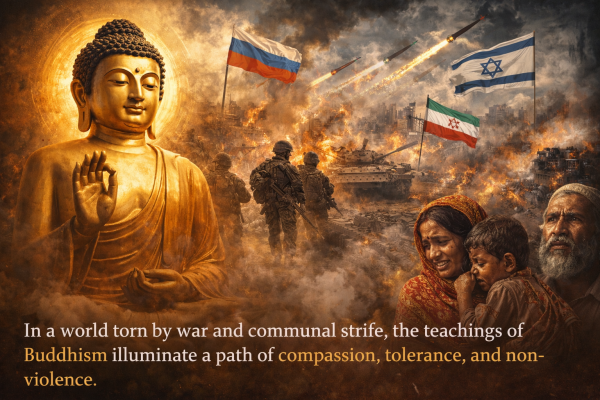
Why the World Needs Buddhism in the Age of Wars

In an age marked by wars, rising tensions, and communal violence, the teachings of Buddhism offer a path toward compassion, tolerance, and non‑violence. From the Russia–Ukraine conflict to Iran–Israel tensions, and even internal strife in Pakistan and Bangladesh, the philosophy of Buddha reminds humanity that lasting peace begins with empathy, dialogue, and ethical reflection.

Read More
Today in History: March 10 — The 1959 Tibetan Uprising and Its Impact on Buddhism in China

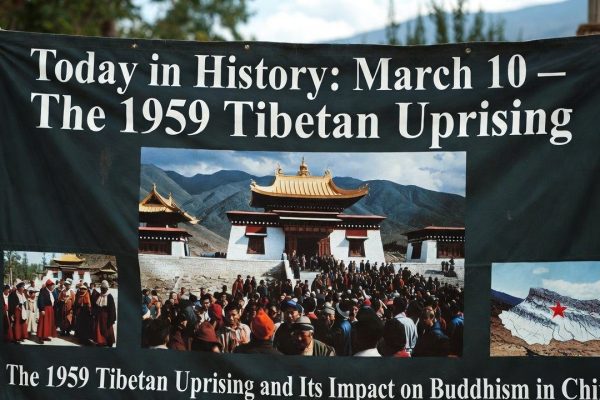
The 1959 Tibetan Uprising and Its Impact on Buddhism in China

On March 10, 1959, thousands of Tibetans gathered in Lhasa to protest Chinese rule, sparking the Tibetan Uprising and forcing the 14th Dalai Lama into exile in India. The event became a turning point in Tibetan history, leading to major changes in the practice of Tibetan Buddhism within China while also spreading its teachings across the world through the Tibetan diaspora.

Read More

Development of the Buddhist Thematic Circuit in India

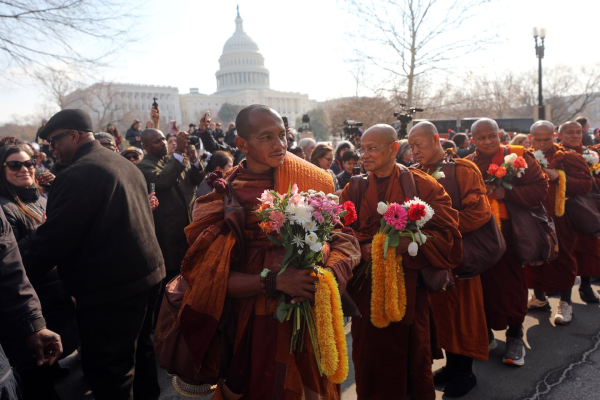
By IBH Forum Introduction The Government of India has undertaken a focused and structured approach to strengthen Buddhist tourism and heritage across the country. Through centrally supported schemes, efforts are being made to preserve ancient Buddhist sites, enhance pilgrimage infrastructure, and promote cultural and spiritual tourism connected with the life and teachings of Lord Buddha. Government Initiatives for Buddhist Tourism The Ministry of Tourism provides financial assistance to State Governments and Union Territory Administrations through the Swadesh Darshan (SD) Scheme and the Pilgrimage Rejuvenation and Spiritual, Heritage Augmentation Drive (PRASHAD) Scheme. These initiatives aim to improve infrastructure, accessibility, and visitor facilities at important Buddhist destinations. The Buddhist Circuit has been identified as a key thematic circuit under the Swadesh Darshan Scheme, focusing on historically and spiritually significant Buddhist locations across multiple states. Conservation and Public Amenities at Buddhist Sites The Archaeological Survey of India (ASI), under the Ministry of Culture, is responsible for the conservation and preservation of protected Buddhist monuments. As part of its Annual Conservation Programme, ASI regularly undertakes the development and upgradation of public amenities such as toilets, drinking water facilities, parking areas, pathways, signage, benches, ramps, and wheelchair access to ensure a better experience for visitors and pilgrims. Asian Buddhist Summit The 1st Asian Buddhist Summit (ABS) was organized by the Ministry of Culture in collaboration with the International Buddhist Confederation (IBC), New Delhi. The summit focused on Asian spiritual traditions and strengthening cultural and religious cooperation among Asian nations. The summit witnessed wide international participation, including monks, scholars, diplomats, and delegates from across Asia. It has been decided that the Asian Buddhist Summit will be organized in alternate years to sustain dialogue and cooperation among Buddhist communities. Table 1: Key Details of the Asian Buddhist Summit Particulars Details Event Name Asian Buddhist Summit (1st Edition) Organised By Ministry of Culture Collaborating Organization International Buddhist Confederation (IBC), New Delhi Focus Area Asian spiritual traditions and cultural & religious cooperation Total Delegates More than 650 Foreign Delegates 130 Countries Represented 26 Asian countries Diplomatic Participation Diplomats from 12 countries Monks Participated 40 Mahayana and 40 Theravada monks Event Frequency Once every two years Event Date Not specified in the official release Event Time Not specified in the official release Event Place Not specified in the official release Projects Sanctioned under the Buddhist Thematic Circuit Under the Swadesh Darshan Scheme, several projects have been sanctioned for the development of the Buddhist Circuit across different states to improve tourism infrastructure and heritage interpretation. Table 2: Details of Projects Sanctioned under the Buddhist Thematic Circuit S. No. State/UT Sanction Year Project Name Amount Sanctioned (₹ Cr.) Amount Released / Authorized (₹ Cr.) 1 Andhra Pradesh 2017–18 Development of Buddhist Circuit: Shalihundam, Bavikonda, Bojjanakonda, Amravati, Anupu 35.24 30.02 2 Bihar 2016–17 Construction of Convention Centre at Bodhgaya 95.18 95.18 3 Gujarat 2017–18 Development of Junagadh, Gir Somnath, Bharuch, Kutch, Bhavnagar, Rajkot, Mehsana 26.68 22.28 4 Madhya Pradesh 2016–17 Development of Sanchi, Satna, Rewa, Mandsaur, Dhar 74.02 72.75 5 Uttar Pradesh 2016–17 Development of Sravasti, Kushinagar, Kapilvastu 87.89 72.56 The released/authorized amount includes authorization to CNA through the TSA Model I for Central Sector Schemes. Additional Buddhist Tourism Initiatives Under the PRASHAD Scheme, the project titled Development of Pilgrimage Facilitation at Four Patron Saints at Yuksom, Sikkim was sanctioned with an allocation of ₹33.32 crore in the year 2020–21. Further, under the Special Assistance to States/Union Territories for Capital Investment (SASCI) Scheme, the Government of India approved the project Integrated Buddhist Tourism Development in Shrawasti, Uttar Pradesh on 26 November 2024, with a total project cost of ₹80.24 crore. The initiative aims to develop Shrawasti as a globally recognized Buddhist tourism destination. Conclusion The coordinated efforts of the Government of India through tourism, culture, and infrastructure development schemes highlight a strong commitment to preserving Buddhist heritage and promoting Buddhist tourism. These initiatives strengthen pilgrimage facilities, cultural exchange, and India’s historical role as the land of Buddha. IBH and Community Participation IBH is dedicated to working on the principles and teachings of Buddhism by promoting awareness, dialogue, research, and cultural engagement. Through its forums and activities, IBH encourages individuals, scholars, monks, and youth to actively participate in preserving Buddhist heritage and spreading values of peace, compassion, and harmony. Anyone interested can become a part of this collective effort by engaging with IBH’s initiatives and contributing towards the shared vision of strengthening Buddhism in contemporary society.

Read More