Introduction: The country that gave Buddhism to the world
Buddhism is one of Asia’s most influential spiritual and philosophical traditions, shaping civilizations from Sri Lanka and Thailand to China, Japan, Korea, and beyond. Yet, as India and China compete for influence across Asia, an important question emerges: who has the stronger historical and moral claim to lead the global Buddhist community?
The answer, from an India-centred perspective, begins with history. Buddhism emerged in the Indian subcontinent, where Siddhartha Gautama developed the teachings that would transform religious thought across Asia. India’s sacred geography preserves several of the most important sites associated with his life, enlightenment, first sermon, and final passing. Its ancient monasteries, archaeological remains, scriptures, and philosophical traditions provide tangible evidence of Buddhism’s origins and early development.
China became a major Buddhist civilization only after Buddhism travelled there from South Asia. Although Chinese communities subsequently developed distinctive and influential Buddhist traditions, the religion’s foundational teachings and early intellectual traditions originated in the Indian subcontinent.
Today, India is using this historical inheritance to strengthen its international relationships through Buddhist diplomacy, pilgrimage, cultural preservation, and academic exchange. China, meanwhile, faces a fundamental contradiction: an officially atheist Communist Party seeks to exercise substantial control over a religious tradition that developed independently of the modern Chinese state.
India’s strongest argument is that it possesses the historical foundations, sacred geography, and cultural legitimacy to lead international efforts to preserve and promote Buddhism—while China’s political control over religious institutions raises serious questions about its claim to represent Buddhist values.
1. Buddhism was born in the Indian subcontinent
India’s most powerful advantage over China is historical. Buddhism was not founded in China, nor did its earliest teachings emerge from Chinese civilization. Siddhartha Gautama lived and taught in the ancient South Asian cultural landscape, and the Buddhist community developed there before spreading across Asia.
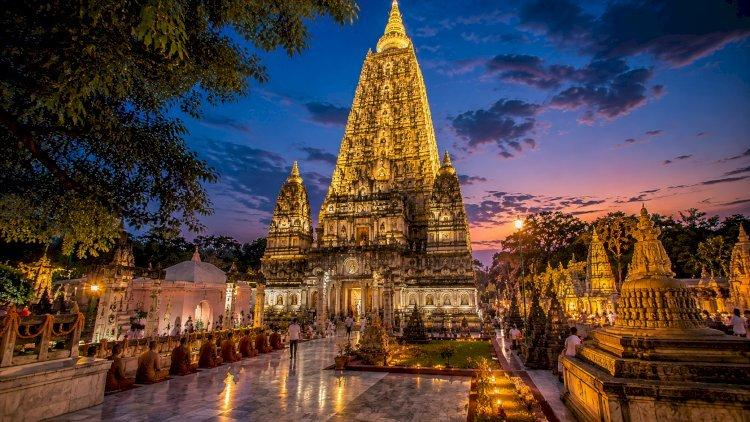
The geographical record is particularly significant. Bodh Gaya, Sarnath, and Kushinagar are in present-day India, while Lumbini, the Buddha’s birthplace, is in present-day Nepal. These locations form a historical and spiritual landscape that predates modern national borders.
Three places are especially important to India’s claim.
- Bodh Gaya, Bihar: The place traditionally associated with the Buddha’s enlightenment. The Mahabodhi Temple complex is a UNESCO World Heritage Site and a major destination for Buddhist pilgrims worldwide.
- Sarnath, Uttar Pradesh: The site traditionally associated with the Buddha’s first sermon, where he began teaching the Dharma to his first disciples.
- Kushinagar, Uttar Pradesh: The place traditionally associated with the Buddha’s final passing, known as Mahaparinirvana.
These are not merely monuments that India has built to promote tourism. They are places connected to the origins of Buddhism itself.
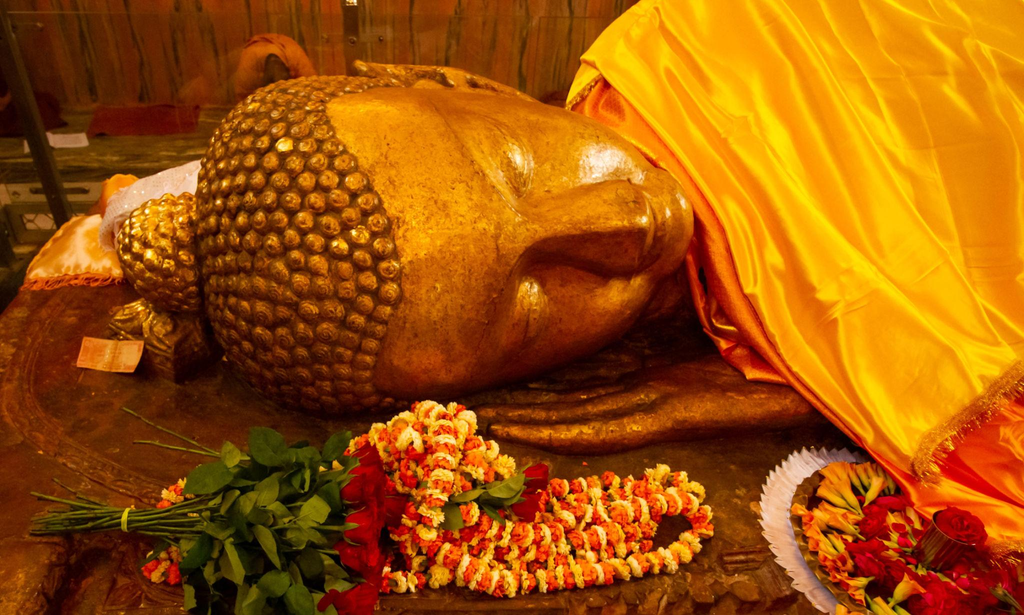
China possesses extraordinary Buddhist temples, caves, monasteries, and religious art. However, those monuments represent the development and transmission of Buddhism beyond its original homeland. India preserves the foundational geography from which this international religious tradition emerged.
That distinction gives India a powerful form of cultural legitimacy that economic resources and diplomatic influence cannot manufacture.
2. China received Buddhism from India: history cannot be rewritten
The historical transmission of Buddhism from India into China is well established.
Buddhism travelled through Central Asia and the Silk Roads, carried by monks, merchants, translators, and pilgrims. Over centuries, Chinese scholars translated Buddhist scriptures and adapted Buddhist philosophy to their own intellectual and cultural traditions.
Several historical figures demonstrate the importance of India in this process.
Xuanzang: This seventh-century Chinese monk travelled to India to study Buddhist philosophy and collect scriptures. His journey demonstrates the importance that Chinese Buddhist scholarship placed on Indian centres of learning.
Kumarajiva: The influential translator helped transmit Buddhist scriptures into Chinese, contributing to the development of Chinese Buddhist thought.
Nalanda: This ancient Indian centre of Buddhist learning attracted scholars from across Asia. It became a symbol of India’s historic contribution to Buddhist education, philosophy, and intellectual exchange.
These historical connections support an important India-centred argument: China’s Buddhist heritage is deeply indebted to the Indian intellectual and religious traditions from which Buddhism emerged.
Chinese Buddhists subsequently made significant contributions of their own. Nevertheless, the direction of the original transmission remains clear. Buddhism travelled from South Asia into China, not from China into India.
China can claim centuries of Buddhist practice, but it cannot claim the historical origin of Buddhism.
This distinction matters in contemporary geopolitics because India can ground its cultural diplomacy in documented historical connections rather than simply the promotion of a national brand.
3. India’s Buddhist heritage is a source of geopolitical power
India has increasingly used its Buddhist heritage to develop relationships with Buddhist-majority countries and communities.
This strategy is an example of soft power: the ability to influence others through culture, historical connections, education, and shared values rather than coercion.
The Global Buddhist Summit
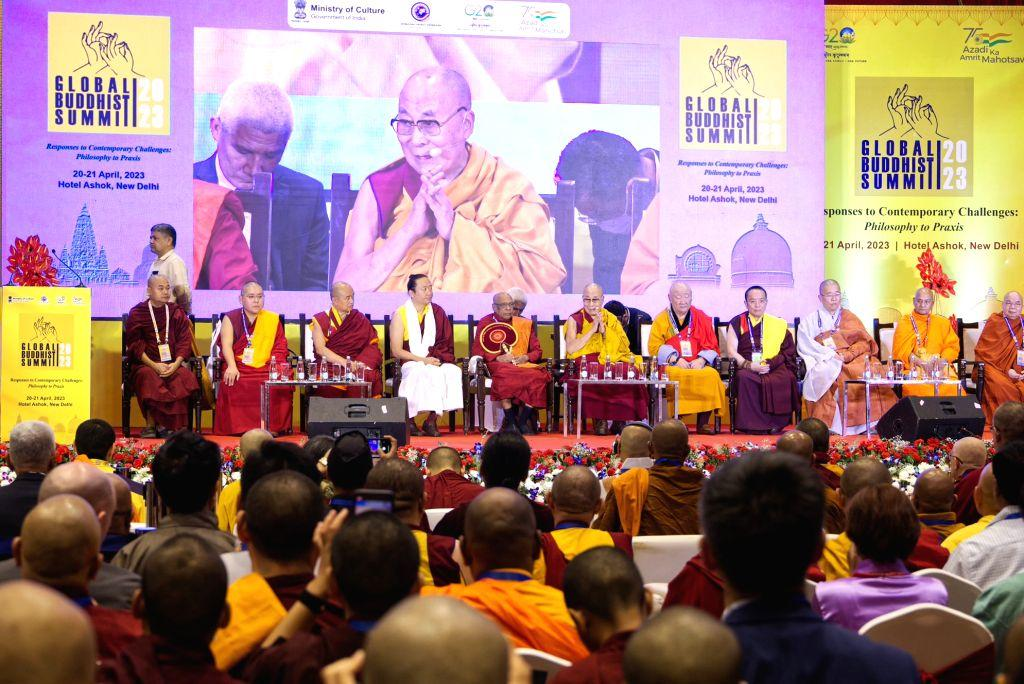
India hosted the first Global Buddhist Summit in New Delhi in April 2023, bringing together Buddhist leaders, scholars, and practitioners to discuss peace, sustainability, and human well-being. The initiative was organized by India’s Ministry of Culture in collaboration with the International Buddhist Confederation.
India’s second Global Buddhist Summit in 2026 continued this effort to position the country as an international centre for Buddhist dialogue and scholarship.
These events demonstrate that India is actively translating its historical inheritance into contemporary diplomatic engagement.
The Buddhist Circuit
India promotes travel to sites associated with the Buddha’s life and the development of early Buddhism. This includes Bodh Gaya, Sarnath, Kushinagar, and other important heritage destinations.
The Buddhist Circuit connects religious pilgrimage with cultural exchange, tourism, infrastructure development, and international relationships.
For pilgrims from Thailand, Sri Lanka, Japan, Vietnam, and other Buddhist societies, India offers the opportunity to visit the landscape where Buddhism began.
China can organize Buddhist conferences and promote its own religious heritage. It cannot reproduce India’s unique connection to the Buddha’s foundational sacred sites.
Nalanda’s international legacy
The revival of Nalanda as an international university also strengthens India’s position as a centre of Buddhist scholarship and Asian intellectual exchange.
The original Nalanda was a renowned centre of learning that attracted scholars from different parts of Asia. Its modern institutional legacy gives India an opportunity to reconnect contemporary education with its historical role in Buddhist philosophy and scholarship.
Taken together, these initiatives demonstrate why India has a credible claim to leadership: it is not merely invoking the past but building international institutions and relationships around that inheritance.
4. China’s official atheism creates a fundamental contradiction
One of the strongest criticisms of China’s claim to Buddhist leadership concerns the political system under which its religious institutions operate.
The Chinese Communist Party is officially atheist. At the same time, the Chinese state recognizes Buddhism as an official religion and regulates its institutions.
This distinction is important: China has millions of people who engage in Buddhist practices, and their religious beliefs should not be dismissed simply because the ruling party is atheist.
Nevertheless, Beijing’s approach raises a serious question: can a government credibly present itself as a guardian of Buddhist traditions while insisting that religious institutions operate within the political boundaries established by the ruling party?
China’s religious governance includes registration requirements, institutional supervision, and policies encouraging the adaptation of religious practice to Chinese political and cultural priorities.
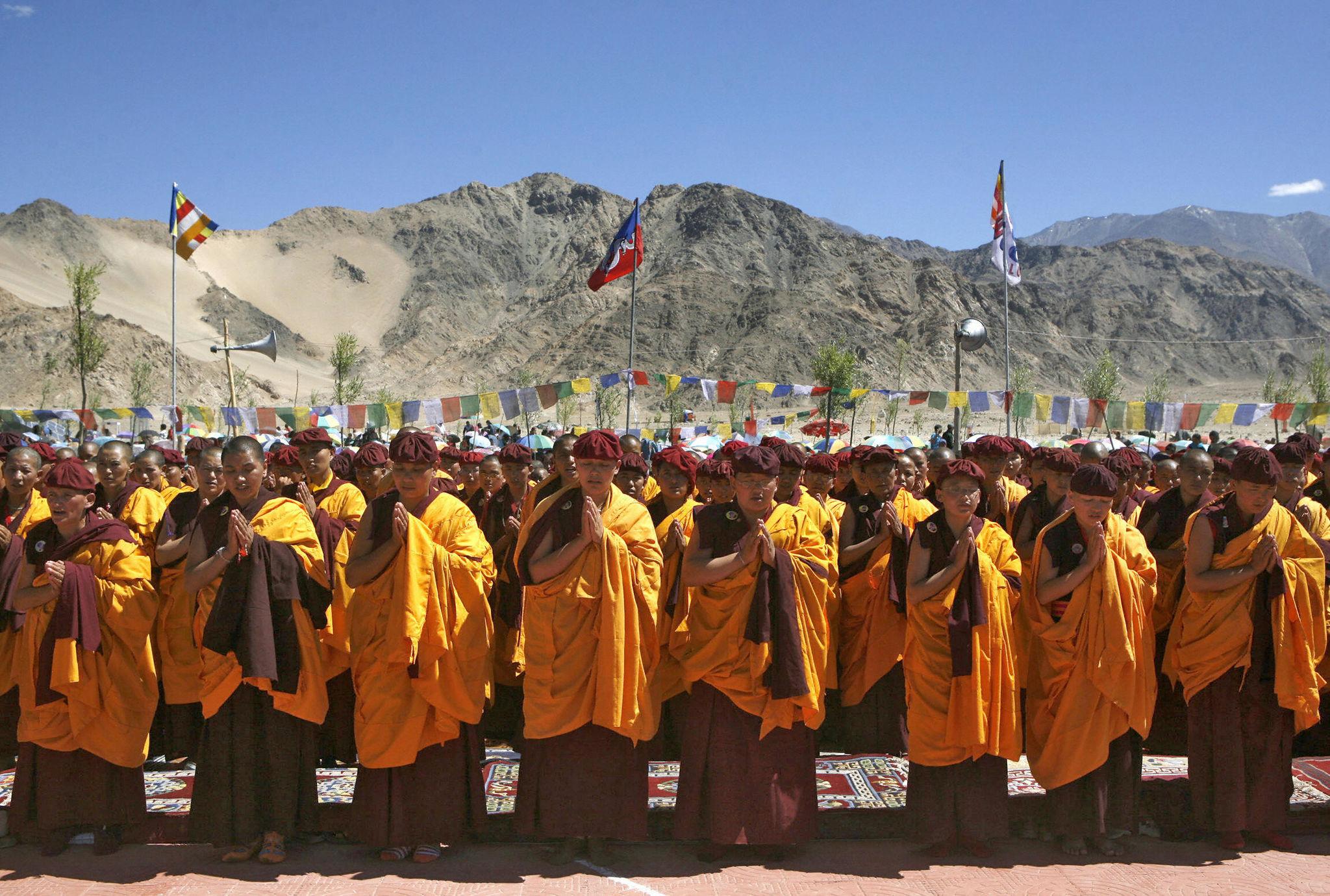
Critics have argued that these controls are particularly restrictive for Tibetan Buddhists, whose religious traditions and institutions have long been closely connected with questions of cultural identity and political autonomy.
From an India-centred perspective, this is where the contrast becomes especially sharp.
India can promote Buddhist heritage through pilgrimage, scholarship, cultural preservation, and international dialogue without claiming the right to determine who is spiritually qualified to lead Buddhist communities abroad.
China’s model gives the state a much more direct role in religious authority. This creates a credibility problem when Beijing seeks international recognition as a leader in Buddhist culture.
The issue is not that Chinese Buddhists are less genuine than Indian Buddhists. Rather, it is that the Chinese government has political interests that can conflict with the religious independence of the communities it claims to represent.
5. The Dalai Lama succession: China’s greatest Buddhist credibility challenge
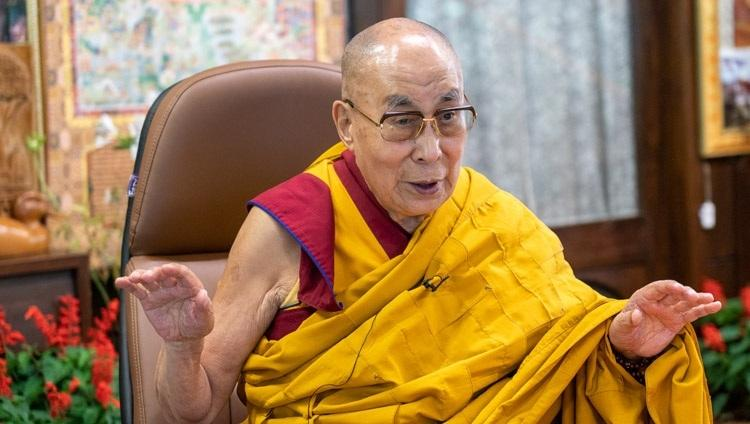
The question of who will succeed the Dalai Lama illustrates the geopolitical stakes of Buddhist leadership.
The Dalai Lama has lived in India since fleeing Tibet in 1959. Dharamshala has become an important centre for Tibetan religious, educational, and cultural life in exile.
In July 2025, the Dalai Lama stated that responsibility for identifying his successor rests with the Gaden Phodrang Trust. Beijing, meanwhile, maintains that the succession must comply with Chinese laws and approved religious procedures.
India publicly supported the Dalai Lama’s position in July 2025, opposing Chinese interference in the process.
This dispute extends beyond a religious appointment. The next Dalai Lama could become an important symbol of Tibetan cultural identity, religious continuity, and political legitimacy.
From India’s perspective, the principle is straightforward: a spiritual leader’s succession should be determined according to the relevant religious tradition, not imposed by a government seeking political control over that tradition.
India’s position is strengthened by the fact that it hosts the Dalai Lama and Tibetan religious institutions. This gives it a direct role in protecting the conditions under which Tibetan Buddhist traditions can continue to be taught and practised independently of Beijing.
China’s insistence on state authority over the succession, by contrast, risks undermining its claim to represent Buddhist religious values internationally.
This is arguably one of the clearest cases in which India’s historical and institutional position gives it a moral and diplomatic advantage.
6. India offers a different model of Buddhist leadership
The strongest case for India is not simply that Buddhism began there. It is that India can use this heritage to support a model of international Buddhist engagement based on access to sacred places, scholarship, and cultural exchange.
Three elements are especially important.
Historical legitimacy: India’s Buddhist sites and ancient learning centres provide a direct connection to Buddhism’s origins and early development.
International accessibility: Pilgrimage and educational exchanges allow people from different Buddhist traditions to engage with India’s heritage without necessarily accepting the political authority of the Indian state over their religious beliefs.
Cultural diplomacy: International summits, heritage projects, and academic programmes allow India to strengthen relationships with Buddhist communities through shared history and learning.
This model supports India’s wider geopolitical interests, including stronger relationships with Southeast Asian countries, closer cultural connections with East Asia, and an expanded role in international dialogue.
India should therefore present itself not as the owner of Buddhism, but as its historical homeland and a leading custodian of its foundational heritage.
That position is both more credible and more persuasive than attempting to claim exclusive authority over a religion that has developed across many societies.
7. Why India deserves to take the lead
The central argument can be summarized in four points.
| Argument | Why it strengthens India’s position |
|---|---|
| Historical origins | Buddhism emerged in the Indian subcontinent, and many major sites associated with the Buddha’s life are in modern India. |
| Intellectual heritage | Ancient Indian centres such as Nalanda played a major role in Buddhist learning and the transmission of Buddhist philosophy. |
| International engagement | India uses pilgrimage, scholarship, and Buddhist summits to build relationships with Buddhist communities across Asia. |
| Religious autonomy | China’s intervention in Tibetan Buddhist succession raises questions about the independence of religious institutions under state control. |
These arguments do not require denying the achievements of Chinese Buddhist civilization. Instead, they establish why India’s historical position is distinctive and why it should play a leading role in global Buddhist diplomacy.
India’s case is particularly persuasive when the issue is the preservation of Buddhism’s foundational sites, the study of its earliest intellectual traditions, and the protection of religious independence in the face of political pressure.
Conclusion: India’s Buddhist heritage is an advantage China cannot replicate
India’s claim to leadership in Buddhist diplomacy rests on something deeper than contemporary geopolitical competition. It rests on history.
Buddhism emerged in the Indian subcontinent, and India’s sacred geography preserves several of the most important places associated with the Buddha’s life and teachings. Its ancient centres of learning contributed to the intellectual development of Buddhism, while its modern pilgrimage initiatives, international summits, and cultural programmes are turning this inheritance into a contemporary diplomatic asset.
China has a significant Buddhist heritage of its own, but its history begins with the transmission of Buddhism from South Asia. More importantly, the Chinese state’s extensive regulation of religious institutions-and its insistence on political authority over Tibetan Buddhist succession-raises legitimate questions about its commitment to religious independence.
India, by contrast, is well placed to champion Buddhist heritage through historical preservation, international scholarship, pilgrimage, and dialogue.
India should lead global efforts to preserve and promote Buddhism because it is the historical homeland of the tradition, possesses its foundational sacred geography, and can strengthen its international role by protecting the religious and intellectual heritage that originated there.
The ultimate measure of leadership, however, will be how effectively India preserves these sites, supports rigorous Buddhist scholarship, respects the diversity of Buddhist communities, and demonstrates in practice the values of compassion, wisdom, and non-violence associated with the Buddha’s teachings.