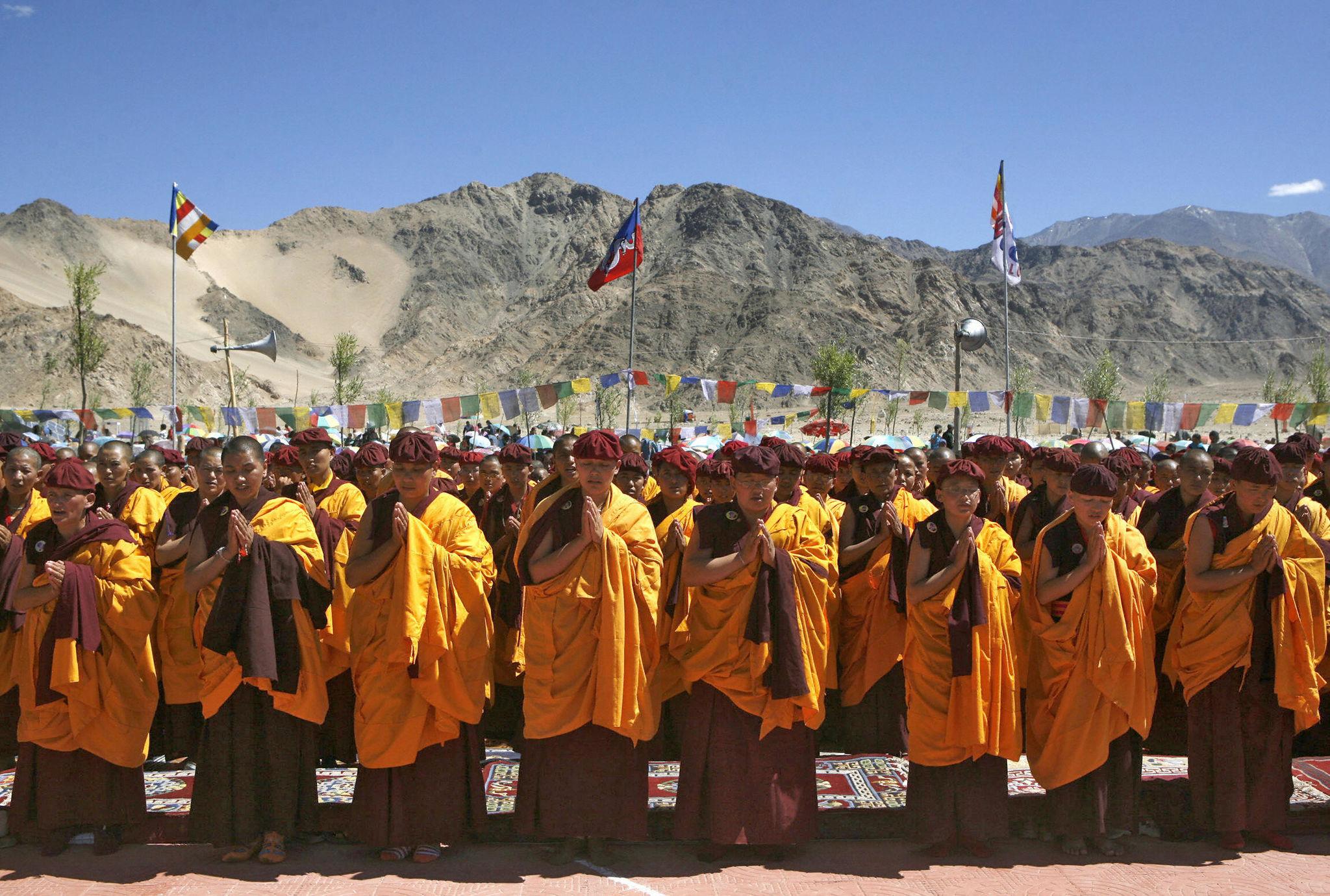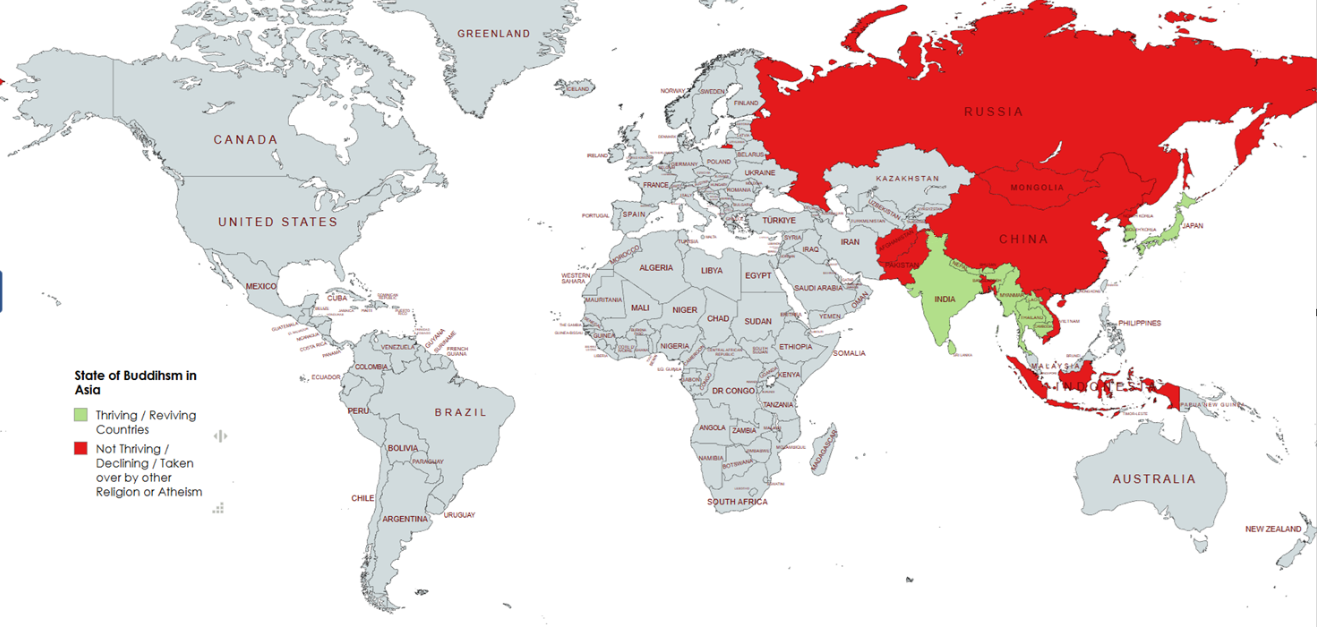
Buddhism, a path of peace, compassion, and wisdom, continues to guide millions of lives across the world. While some nations practice Buddhism openly and vibrantly, there are places where political or cultural events have limited its public presence. Yet, even in such places, people still carry the teachings quietly in their hearts.
At the same time, India — the birthplace of the Buddha — plays a powerful role in keeping Buddhism alive globally through events, education, cultural exchange, and international cooperation.
Countries Where Buddhism Is Thriving Strongly
1. Thailand
Thailand stands as one of the most devoted Buddhist countries. Monks, monasteries, meditation practice, and Buddhist ethics shape everyday life. People actively follow the teachings of loving-kindness and mindfulness.
2. Sri Lanka
Sri Lanka is known for its deep respect towards the Buddha’s teachings. The country preserves ancient Buddhist texts, traditions, and monastic discipline. Buddhist temples serve as centers of both spiritual and community life.
3. Bhutan
Bhutan is a nation where Vajrayāna Buddhism guides the lifestyle, values, and even the governance model of “Gross National Happiness.”
Buddhist rituals, meditation, and compassion-based policies are central to the country’s identity.
4. Japan
Japan blends tradition with modernity, and Buddhism remains a major part of cultural life, influencing art, philosophy, and daily rituals. Zen, Nichiren, and Pure Land practices remain active and respected.
5. Nepal
As the land where the Buddha was born, Nepal remains a vibrant Buddhist center. Monasteries, festivals, and meditation retreats attract both locals and international pilgrims.
6. India — A Rising Center of Buddhist Practice
India today is witnessing strong growth in Buddhist communities — from Tibetan monasteries in the Himalayas to Ambedkarite Buddhism across Maharashtra, Uttar Pradesh, and other states. Meditation centers, universities, and international pilgrimages make India one of the most important Buddhist countries today.
Countries or Regions Where Buddhism Was Suppressed but Still Survives Quietly/ taken over by other religions/atheism
In several parts of Asia, Buddhism was weakened through conquest, political repression, or cultural replacement. In these areas, the religion survives only in small communities, isolated monasteries, or cultural remnants. The following examples show where Buddhism continues in a fragile form.
🇨🇳 China
How Buddhism declined:
- Repeated waves of state control, monastery closures, and political campaigns restricted religious activity.
- Large monastic networks were dismantled, especially during the 20th century.
How it barely survives:
- Some temples function but under restrictions.
- Many practices persist only privately or blended with folk customs.
- Institutional Buddhism is a fraction of its historical size.
- People do follow Buddhism but most of them consider themselves as atheists
🇹🇯 Tibet (Autonomous Region of China)
How Buddhism was suppressed:
- Monasteries closed or placed under strict state management.
- Large monastic populations were dispersed.
How it barely survives:
- Monastic life is limited and heavily monitored.
- Cultural memory remains strong, but unrestricted religious activity is not possible.
🇲🇳 Mongolia
How Buddhism was suppressed:
- Nearly all monasteries were destroyed in the 1930s under communist rule.
- Monks were imprisoned or executed.
How it barely survives:
- Only small numbers of monks remained in secret.
- Present-day institutions are far smaller than historical levels.
🇦🇫 Afghanistan
How Buddhism disappeared:
- Islamic conquests eliminated Buddhist communities by the 12th century.
- Remaining statues and monasteries were destroyed in later periods.
How it barely survives:
- Only archaeological ruins remain.
- No significant Buddhist population is left.
🇵🇰 Pakistan
How Buddhism declined:
- Once a major Buddhist center (Gandhāra region).
- Gradually replaced by Islam and abandoned.
How it barely survives:
- Only in archaeological sites like Taxila and Swat Valley.
- No significant living Buddhist communities.
🇧🇩 Bangladesh
How Buddhism declined:
- Buddhist communities shrank under centuries of Islamic rule.
- Many were absorbed or displaced.
How it barely survives:
- Small ethnic groups (Chakma, Marma) maintain limited Buddhist traditions.
- These communities face social and political pressure.
🇮🇩 Indonesia
How Buddhism declined:
- Once home to major Buddhist kingdoms like Srivijaya, later replaced by Islam across the region.
How it barely survives:
- Some ethnic Chinese communities maintain small Buddhist temples.
- Religious presence is minimal and mostly urban.
🇲🇾 Malaysia
How Buddhism declined:
- Pre-Islamic Buddhist traditions vanished as Islamic sultanates emerged.
How it barely survives:
- Only small minority groups (mainly Chinese Malaysian) practice Buddhism.
- Indigenous Buddhist traditions have disappeared.
🇰🇿 🇺🇿 🇹🇲 🇹🇯 Central Asia
How Buddhism disappeared:
- Islamic expansion replaced Buddhist societies by around the 10th century.
How it barely survives:
- Only in archaeological remains (caves, stupas, murals).
- No living Buddhist communities.
India’s Powerful Role in Supporting and Spreading Buddhism Worldwide
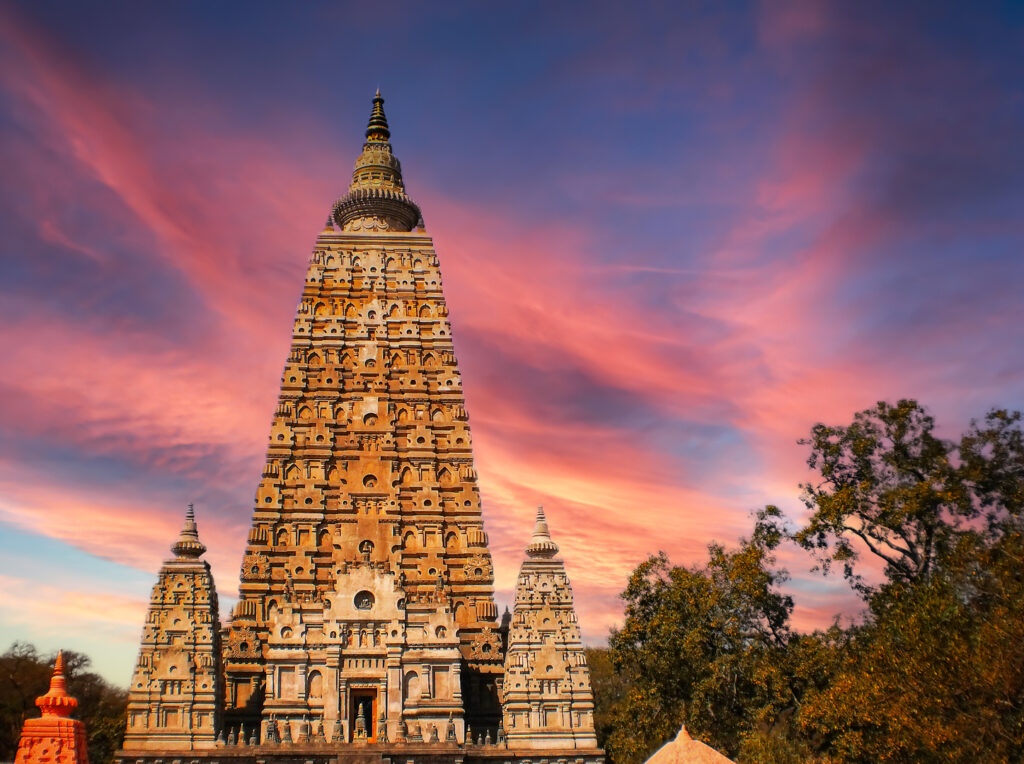
As the sacred birthplace of the Buddha, India holds a central and respected place in the global Buddhist community. Today, India actively helps other countries follow Buddhist teachings through cultural programs, international events, education, and global cooperation.
1. Hosting Major International Buddhist Events
India organizes several global gatherings to unite Buddhists and spread awareness of the Buddha’s message, such as:
- Global Buddhist Summit
- International Buddhist Conclave
- Vesak celebrations with global participation
- Dhamma Chakra Pravartan Day at Nagpur
These events bring monks, scholars, practitioners, and leaders from dozens of countries to India to celebrate and spread Buddhism together.
2. Supporting Buddhist Heritage and Pilgrimage
India preserves and promotes all major Buddhist sites:
- Bodh Gaya
- Sarnath
- Kushinagar
- Nalanda
- Rajgir
- Shravasti
- Vaishali
Millions of pilgrims from Thailand, Sri Lanka, Japan, Korea, Myanmar, Bhutan, Vietnam, and many others visit these places every year. India provides infrastructure, tourism support, and cultural guides to help them experience the teachings deeply.
3. Helping Other Countries Through Cultural Diplomacy
India supports Buddhist-majority nations by:
- restoring monasteries
- offering spiritual and academic scholarships
- sharing sacred Buddhist manuscripts
- conducting cultural exchange programs
- creating international Buddhist study centers
This strengthens global understanding and unity.
4. Awareness Programs for the Unaware
India conducts nationwide and international awareness activities to introduce Buddhism to people who may not be familiar with it:
- meditation workshops
- youth programs and seminars
- Buddhist festivals and exhibitions
- cultural documentaries
- educational camps in schools and colleges
- guided heritage walks at holy sites
These efforts help spread mindfulness, compassion, and peace to new generations.
5. India as a Global Buddhist Learning Hub
From Nalanda University to Tibetan monastic institutes and modern meditation centers, India welcomes thousands of international students every year to study:
- teachings of the Buddha
- philosophy
- meditation
- ancient texts
- Buddhist ethics
This allows India to share the wisdom of Buddhism with the entire world.
Conclusion
Buddhism continues to shine across the globe — thriving strongly in nations like Thailand, Sri Lanka, Bhutan, Japan, Nepal, and India, while surviving quietly and courageously in places where it once faced challenges.
Through international cooperation, cultural leadership, and widespread awareness programs, India plays a remarkable role in helping the world preserve and follow the Buddhist path. With compassion as its foundation and enlightenment as its goal, Buddhism remains a timeless guide for humanity, inspiring peace and harmony everywhere.