1st Global Buddhist Summit in India

Prime Minister of India, Shri Narendra Modi will open the inaugural Global Buddhist Summit on April 20 in New Delhi, according to Union Minister for Culture Tourism and DoNER  Shri G.K. Reddy. The International Buddhist Confederation (IBC), an organisation of the Ministry of Culture will organise the Global Buddhist Summit (GBS) at the Ashok Hotel on April 20–21, 2023. In his briefing, he stated that for the first time, notable Buddhist monks from other nations will visit India and participate in the Summit. Additionally, he said that discussions during the summit will focus on using Buddhist philosophy and thought to address current issues. Given that Buddhism originated in India, this international summit will highlight the relevance and centrality of India in Buddhism. Additionally, he stated that “Responses to Contemporary Challenges: Philosophy to Praxis” will be the focus of the two-day Global Buddhist Summit. Sh G Kishan Reddy also informed that this global summit will also be a medium to enhance the cultural and diplomatic relationships with other countries. Union Minister disclosed that Delegates from almost 30 countries will participate in this summit and around 171 delegates from foreign countries and 150 delegates Indian Buddhist organizations. Eminent scholars, Sangha leaders and Dharma practitioners from all over the world are attending the conference. There are 173 international participants comprising 84 Sangha member and 151 Indian delegates comprising 46 Sangha members, 40 nuns and 65 laity from outside Delhi. Nearly 200 persons from NCR region will also be participating in the conference including more than 30 Ambassadors from foreign Embassies.  The delegates will discuss today’s pressing global issues and look for answers in the Buddha Dhamma that is based on universal values. The discussions will fall under the following four themes: Two keynote speeches will be delivered by His Holiness Thich Tri Quang, Supreme Patriarch of Vietnam Buddhist Sangha and Prof. Robert Thurman, for Sangha and academic sessions, respectively. Religious practices with Indian roots are an integral aspect of “Ancient Dharma, the eternal way of life.” Buddha Dhamma made a tremendous impact on the rise of human civilization in ancient India. Its global dissemination caused a vast churning of knowledge and civilizations as well as the blossoming of several spiritual and philosophical traditions all over the world. The discussions are anticipated to focus on how the Buddha Dhamma’s core principles might offer motivation and direction in modern settings that promote consumerism and technological developments while also coping with a destroyed earth and civilizations that are losing their sense of purpose quickly. Religious practices with Indian roots are an integral aspect of “Ancient Dharma, the eternal way of life.” Buddha Dhamma made a tremendous impact on the rise of human civilization in ancient India. Its global dissemination caused a vast churning of knowledge and civilizations as well as the blossoming of several spiritual and philosophical traditions all over the world. The discussions are anticipated to focus on how the Buddha Dhamma’s core principles might offer motivation and direction in modern settings that promote consumerism and technological developments while also coping with a destroyed earth and civilizations that are losing their sense of purpose quickly. The Ministry of Culture recently hosted a successful international meeting of experts from the Shanghai Cooperation Organization (SCO) nations on Shared Buddhist Heritage in order to re-establish trans-cultural links and look for similarities between Buddhist art of Central Asia, art styles, archaeological sites, and antiquity in various museums’ collections of the SCO countries. The meeting was organized by the IBC, a global Buddhist umbrella organization with its headquarters in New Delhi. The GBS-2023 is a similar initiative that seeks to involve scholars and leaders of the global Buddhist dhamma in discussions about issues of Buddhist and universal concern in order to develop policy recommendations to solve them jointly.

Read More

The Buddhist Thinkers from India

Buddhism, a major world religion, originated in India over 2,500 years ago and has had a profound impact on Indian culture and history, as well as on the world at large. Many great Buddhist thinkers from India have contributed to the development of Buddhism, and their teachings have had a profound impact on the religion. One of the most influential and renowned thinkers in Buddhism is Gautama Buddha, also known as Siddhartha Gautama, who founded the religion in the 6th century BCE. Buddha’s teachings centered on the Four Noble Truths, which are the foundation of Buddhist philosophy, and his ideas have influenced many thinkers and philosophers over the centuries. Another significant Indian thinker in Buddhism is Nagarjuna, who lived in the second century CE and is considered one of the most important philosophers in Buddhist philosophy. Nagarjuna’s most famous work, the Mūlamadhyamakakārikā, or the “Fundamental Verses on the Middle Way,” argues that all phenomena are empty of inherent existence. This idea, known as “emptiness,” has become one of the central concepts in Mahayana Buddhist philosophy. Asanga, who lived in the fourth century CE, was a major figure in the development of Yogacara, one of the two main philosophical schools of Mahayana Buddhism. Asanga’s most important work, the Yogācārabhūmi-śāstra, outlines the stages of spiritual practice that lead to the attainment of enlightenment. Asanga’s teachings have had a significant impact on the development of Mahayana Buddhist philosophy, and his ideas continue to be studied and discussed by Buddhist scholars and practitioners today. Dignaga, who lived in the fifth century CE, was a major figure in the development of Buddhist logic and epistemology. His most important work, the Pramāṇa-samuccaya, outlines the Buddhist theory of knowledge. Dignaga’s ideas have had a significant impact on the development of Buddhist philosophy, and his work has been influential in the fields of logic and epistemology. Vasubandhu, who lived in the fourth or fifth century CE, was another major figure in the development of Yogacara. He was born in Puruṣapura in ancient India. Vasubandhu’s most important work, the Abhidharmakośa-bhāṣya, provides a detailed analysis of Buddhist psychology and philosophy. Vasubandhu’s ideas have had a significant impact on the development of Mahayana Buddhist philosophy, and his work continues to be studied and discussed by Buddhist scholars and practitioners today. Other important thinkers in Buddhism include Maitreya, who is believed to be the future Buddha, and Bodhidharma, who is credited with bringing Buddhism to China from India and founding the Chan (Zen) school of Buddhism. Maitreya’s most important work, the Maitreya-bhāvanā-sūtra, outlines the practice of loving-kindness and compassion, while Bodhidharma’s teachings focused on meditation and the direct realization of one’s true nature. In addition to these thinkers, there were many other scholars, philosophers, and teachers who contributed to the development of Buddhism in India. Some of these include Aryadeva, who wrote commentaries on Nagarjuna’s works, and Dharmakirti, who wrote extensively on Buddhist logic and epistemology. The works of these ancient Indian thinkers, along with those of Nagarjuna, Asanga, Dignaga, Vasubandhu, and others, have had a profound impact on the development of Buddhist philosophy and have influenced countless practitioners and scholars over the centuries. It is important to note that the teachings of these great thinkers were not static, but rather evolved over time, as different interpretations and schools of Buddhism emerged. For example, Nagarjuna’s teachings on emptiness were further developed by his disciple Aryadeva, who wrote extensively on the topic and provided important commentaries on Nagarjuna’s works. Similarly, the works of Asanga and Vasubandhu were further developed by later Yogacara and Madhyamaka philosophers, who elaborated on their ideas and contributed new insights to Buddhist philosophy. Another important aspect of these great thinkers’ contributions to Buddhism is their focus on practice and meditation. While they certainly wrote extensively on philosophical topics, they were also deeply committed to the practical aspects of Buddhist practice, such as mindfulness, compassion, and meditation. In fact, many of their works include detailed instructions on how to engage in these practices and develop one’s spiritual life. One of the most notable examples of this focus on practice is the teachings of Bodhidharma, who emphasized the importance of meditation in the realization of one’s true nature. Bodhidharma’s teachings were instrumental in the development of Chan (Zen) Buddhism, which emphasized the direct experience of reality over philosophical speculation or doctrine. This approach to practice and realization has had a profound impact on Buddhism and has influenced many practitioners and scholars over the centuries. Overall, the contributions of these great ancient Indian thinkers to Buddhism are immeasurable, and their teachings have had a profound impact on the development of the religion. From the foundational teachings of Gautama Buddha to the philosophical elaborations of Nagarjuna and beyond, these thinkers have shaped the way Buddhists think about the world, the self, and the path to enlightenment. Whether through their philosophical insights, practical teachings, or personal examples, they have inspired countless practitioners and scholars to deepen their understanding of Buddhism and apply its principles in their own lives.

Read More

Bodhidharma: A Patriarch of Mahayana Buddhism

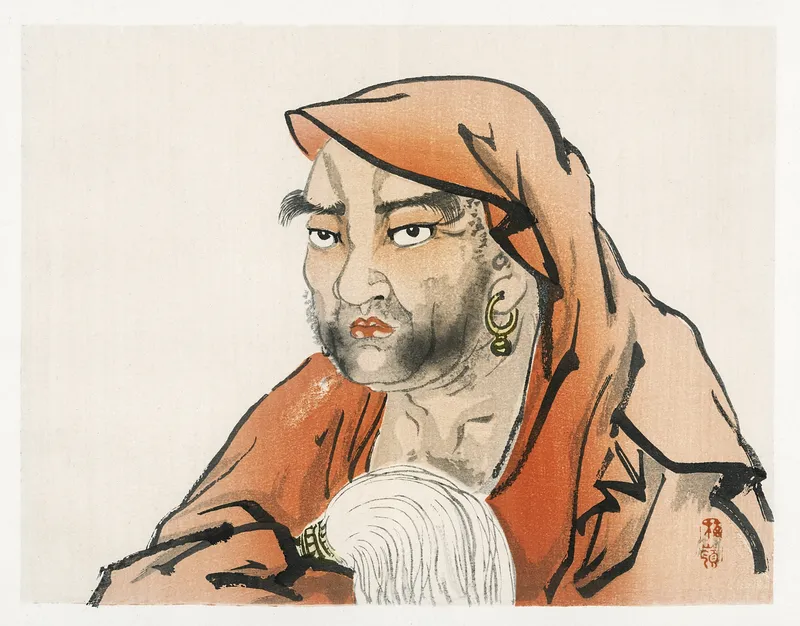
Submitted by Phuntsog Dolma, Ph. D Bodhidharma, a revered Buddhist monk who lived during 5th or 6th century is credited with the diffusion of Chan Buddhism (Chinese school of Mahayana Buddhism) to China. The word Chan is derived from the Sanskrit word ‘Dhyana’ means ‘mental absorption’ or ‘meditation’ which was later transmitted to Vietnam as Thien, Korea as Seon and in Japan as Zen Buddhism. Bodhidharma was the second Indian Buddhist monk who traveled to Southern China and is known as Putidamo in China and Daruma in Japan. The account of the life of Bodhidharma is mostly legendary and historical sources are scanty. He was said to be the third son of Pallava king Simhavarman II of the ancient Pallava dynasty of South India. The ancient Pallava kingdom consisted of the present state of Tamil Nadu, Karnataka and Telangana. Back then South India was a cradle of Mahayana Buddhism and was the birthplace of great Buddhist panditas such as Acharya Nagarjuna. The Chinese monk traveler Xuanzang (Hsüan tsang) who visited India roughly 100 years after Bodhidharma in his travelogue recorded hundreds of Mahayana monasteries and 10,000 monks in Kanchi, the capital of the ancient Pallava dynasty of India. After the passing away of his father, Bodhidharma decided to renounce his princely life. As a child, he was a bright student and received instruction in Dharma from master Prajnatara who was an accomplished Buddhist master from the heartland of Magadha. Acknowledging the spiritual potential of his student, Prajnotara trained him in the ‘Instantaneous Entrance to the Way’ according to the Mahayana Tradition and attained Bodhi, thus, became the 28th patriarch of Mahayana Buddhism in India and the 1st patriarch of Chan Buddhism in China. On the advice of master Prajnatara, Bodhidharma undertook a journey to China that took him about three years. Upon reaching China, he met Emperor Wu-ti, a devout Buddhist of the Liang dynasty. Their famous meeting is recorded in the Blue Cliff Record, a collection of Buddhist koans compiled in 1125. The dialogue between the two is recorded as follows: The Emperor asked: “I have constructed many temples for Buddhists and used to serve for transcribing a number of Buddhism sutras. What karmic merit is promised?” Bodhi-Dharma replied: “No merit. After this celebrated confrontation with Emperor Wu, Bodhidharma traveled north to live in a cave at Shaolin monastery located on Songshan on Mount Sung near Lo-yang, where he is said to have sat in meditation facing a wall for nine years. Here, he met with his first disciple Huike who further carried out the lineage of Chan tradition in China. He is believed to have founded the Chinese martial arts of the Shaolin School, which later led to the creation of the world-famous Shaolin Gongfu. In a conference paper titled ‘Contribution of Tamils to the Composite Culture of Asia’ it is mentioned that “During his stay at Shaolin monastery Bodhidharma taught the monks the fighting art of India, which today is known as Kalaripayat and which in those days, was known as Vermanie. These ancient martial art forms also had a medicinal aspect, because if any student got injured he would go to his teacher for treatment, as is being done even today at Kalaripayat schools. As a prince, Bodhidharma would have been taught the traditional arts, which he also propagated to his Chinese students. It all started because the long hours of the meditative practice of Mahayana Buddhism was not conducive to the proper circulation of blood. So he taught his students not only martial arts but also breathing techniques, which was related to the Pranayama and other techniques of Yoga, again which he would have learnt as part of the traditional arts training during his princely studies. Another reason for the training of the martial arts, which he imparted to the monks, was to prepare them to be able to defend themselves against highway robbers, thieves and animals as they went from place to place preaching Buddhism”. Thus, Bodhidharma’s approach tended to reject devotional rituals, doctrinal debates, and verbal formalizations. Rather, he favored meditation, through which people are able to intuitively grasp the Buddha nature within. He was also believed to have introduced the Lankavatara Sutra to Chinese Buddhism. He was highly revered by the monks and soon became an icon among the people of China who made visits to the cave to pay their respects to him, which they do even today. In Japan, there are eight major temples that are dedicated to Daruma and he is revered in every aspect of Japanese life and culture. Moreover, the statue of Bodhidharma is enshrined in almost every Japanese Zen temple along with a statue of Buddha. Thus, the teaching of this great saint from Indian soil transformed the life and culture of people in China, Japan, and many other South East Asian countries.

Read More

Holy Relics of the Shakyamuni Buddha

Submitted by Dr. Nilza Wangmo In Mahavamsa, it is mentioned that “When the relics are seen, the Buddha is seen.” While in Śālistamba Sūtra (Rice Seedling Sūtra) we find the Buddha Shakyamuni say, “One who sees the Dharma sees the Buddha” stressing the importance of the body relics and Dharma relics. In the Buddhist tradition, there are various classifications of Buddha: 1. Body relics 2. Contact relics (pāribhogika), i.e., objects that the Buddha owned or used or with which he closely associated, such as bowls, robes, bodhi trees 3. Dharma relics which are meant as either whole Sutras, or a Dharma verse (such as the “ye dharmā hetuprabhavā hetuṃ teṣāṃ tathāgato hyavadat, teṣāṃ ca yo nirodha evaṃvādī mahāśramaṇaḥ”meaning ‘All phenomena arises from causes, The causes are taught by the Tathagata, the cessation of the causes as well is taught by The Great Seer’, or a dhāraṇī, or any record of the Buddha’s teaching. In the case of body relics, it should be pointed out that distinctions came to be made between relics that were actual physical remains of the body, such as bones, teeth, etc. and transmogrified somatic substances that could be as small as mustard seeds and appear as jewel-like beads. These very hard glittering particles exist in a variety of colours and sizes, and are usually found in the ashes of cremation fires. The colours are said to reflect the part of the body or organ with which these particles were associated: white if they originated in bone, black if from the hair, red if from the flesh, etc. One Tibetan tradition even gives these relics different names and associates them with different families of Buddha: sharira are white, the size of a pea, and come from the head; barira are blue, the size of a small pea and come from the space between the ribs; churira are yellow, the size of a mustard seed, and come from the top of the liver; serira are red, also the size of a mustard seed and come from the kidneys; finally nyarira are green, also the size of a mustard seed, and come from the lungs, as mentioned in the book Relics of the Buddha by J. S. Strong. In the Mahaparinirvana Sutra, after the Buddha Shakyamuni’s passing away, his remains were divided and distributed among the princes of eight of the sixteen mahājanapadās. A stupa enshrining the portion of the ashes was constructed by each prince near his capital. They are said to be located at 1. Allakappa (The precise location of this place is not currently known) 2. Kapilavastu 3. Kusinārā, capital city of the Malla kingdom 4. Pāvā, a major city of the Malla kingdom (located about 15 km east of Kushinagar in Uttar Pradesh, India) 5. Rājagaha (Rajgir) a major city of the Magadha kingdom 6. Rāmagrāma, a major city of the Koliya kingdom (According to legend, the serpent king was guarding the Ramagrama stupa, and prevented Ashoka from unearthing the relic) 7. Vesāli, capital city of the Vajji kingdom 8. Veṭhadīpa, a settlement of Veṭhadīpaka Brahmins. Some 300 years later, Emperor Ashoka opened seven of these stupas and removed the Buddha relics. His goal was to redistribute the relics throughout the Maurya Empire into 84,000 stupas which he planned to construct. According to legend, the serpent king prevented Ashoka from unearthing the relic of the Ramagrama stupa.   There are a many places in India where the Buddha’s relics are currently kept. The Piprawa Relics 1898, 1970 is now at the Delhi National Museum. In 1971, K. M. Srivastava discovered 22 bones in soapstone urns dating to 5th century BCE. The K. M. Srivastava Report on Kapilavastu and Holy Buddha Relics was filed to ASI in 1991. According to the book ‘The Return of the Buddha’ by Prof. Himanshu Prabha Ray, a Historian, Oxford Centre for Hindu Studies, the Taxila Relics, Mirpurkhas excavated in 1931 and the Nagarjunakonda Relics, 1932 are said to be enshrined at the Mulagandhakuti Temple in Sarnath near Varanasi, UP under the Mahabodhi Society of India. In 1963, the Devni Mori Relics is said to have been found near Shamalaji, Gujarat in a gold bottle wrapped in silk cloth within a copper bowl kept in a casket (1700 yr. old) with Brahmi inscription that reads ‘Abode of bodily relics of Lord Buddha’. It is now at the Baroda Museum in Gujarat.  The Sopara Relics, 1882 (Asiatic Society of Mumbai) and the Bhattiprolu Relic, 1892 were enshrined in Mumbai in 2006 in the central locking stone of the dome of the Global Vipassana Pagoda and was donated by Mahabodhi Society of India and the PM of Sri Lanka. The Sopara Relics were found in 1882 when Pt. Bhagvanlal Indraji, a renowned archaeologist, numismatist, epigraphist and Honorary Fellow of the ASM, excavated a Buddhist stupa at Nala Sopara near Bombay. The site itself has Mauryan associations and two Asokan edicts have been found. From the centre of the stupa was excavated a large stone coffer containing eight unique Buddhist bronzes of 8th-9th century AD. The coffer also enclosed relic caskets of copper, silver, stone, crystal and gold, along with numerous gold flowers and one of the 13 fragments of a begging bowl believed to have been originally used by Gautama Buddha. During 1958- 1962, the Vaishali Relics were found 55 km Northwest of Patna in Vaishali District in a stupa discovered under the aegis of K. P. Jayaswal Research Institute. The relics was excavated from the core of the stupa mixed with earth, piece of conch, pieces of beads, thin gold leaf and copper punch-marked coin. It is now at the Patna Museum. Similarly, the Girmar Relics, 1889 is said to be at Rajkot, Gujarat; the Bhattiprolu Relics, 1892 are said to be enshrined in Amaravati, Andhra Pradesh and Kolkata under the Mahabodhi Society of India; The Lalitgiri Relics, 1986 in Bhubaneswar and a Tooth Relic, 1930 at Nagarjunakonda in Telangana.

Read More

24 high-ranking monks from Bhutan on trip to India

A delegation of 24 high-ranking Bhutanese monks arrived in Kolkata on a tour of various Buddhist holy sites in India. Buddhism is not only the state religion of the Kingdom of Bhutan but also a way of life, Venerable Ugen Namgyal, the secretary of the Central Monastic Body of Bhutan, told PTI. “We try to live in the footsteps of the Buddha… For us, Buddhism is a way of life. Even our arts and architecture reflect our religious traditions,” Venerable Ugen Namgyal The International Buddhist Confederation (IBC) in coordination with the Central Monastic Body of Bhutan has organized the trip for the monks who head the Buddhist Sangha in each of the districts in the panoramic Himalaya, which lies sandwiched between India’s West Bengal and Tibet. International Buddhist Confederation is the biggest religious Buddhist confederation, based in Delhi, India. The architect of the International Buddhist Confederation is Lama Lobzang. This confederation is the first organization which unites Buddhists from the whole world. The monks, led by IBC’s deputy secretary-general Venerable Jang Chup Choden and Ven Namgyal, will visit various Buddhist sites in India, including the NagarjunaKonda in Andhra Pradesh, Buddhavanam in Telangana and Sankissa in Uttar Pradesh.   ‘Zhung Dratshang’ or the Central Monastic Body of Bhutan was established in 1620. The unification of the country, codification of the laws, and organizational development of the dual system of governance took place only after the establishment of this significant institution. According to Bhutan’s Constitution, the ‘Zhung Dratshang’ is an autonomous institution, financed by an annual grant from the royal government. India is the land of Buddhism where Gautam Buddha lived and get enlightened. This tour will link the great tradition of Buddhism in India and Bhutan. The tour will conclude on November 30.

Read More

Life and Works of Guru Padmasambhava

Submitted by Phuntsog Dolma (Ph. D) Guru Padmasambhava, a great Indian tantric master of 8th century is an important figure in Buddhism. He was instrumental in establishing Vajrayana Buddhism in Tibet and Bhutan and is popularly known as Guru Rinpoche means the Precious Master among his followers. Regarding his birth there is both mythical and legendary story. The first one states that Guru Padmasambhava was miraculously born as an eight-year-old boy form a blossoming Lotus flower in the Danakosha Lake, in the land of Uddiyana. His Tibetan, name is Padma Jungney, translated from the Sanskrit name Padmakara, which means “originated from a lotus.” Thus he is indeed named after his manner of birth. While in his biography titled ‘The Lotus Born: The Life Story of Padmasambhava’ recorded by one of his consorts Yeshe Tsogyal mentions that Padmasambhava was the son of the King Mahusita of Uddiyana and given the name Danarakshita who later took the ordination and given the name Sakya Senge. However, the actual location of Uddiyana is debated; some scholars locate this land to be the state of Odisha in India while others believe it to be in the Swat valley area the erstwhile undivided India and modern-day Pakistan. Interestingly, the birth of Guru Padmasambhava was prophesized by Gautama Buddha in Mahaparinirvana Sutra or Myang-hDas-mDo in Tibetan. In the Mahaparinirvana Sutra, Buddha Shakyamuni announced his own mahaparinirvana to the students who were with him at the time. Many of them, particularly Ananda, the Buddha’s cousin and personal attendant, were quite upset upon hearing this, so the Buddha turned to Ananda and told him not to worry. “Twelve years after my mahaparinirvana, a remarkable being with the name Padmasambhava will appear in the center of a lotus and reveal the highest teaching concerning the ultimate state of the true nature, bringing great benefit to all sentient beings.” Tibetan history credits Guru Padmasambhava as one of the founding fathers of Buddhism in Tibet along with Acharya Shantarakshita from India. He was one of the famous seventeen exceptional pandit scholars at Nalanda Monastic University in India (the great centre of Buddhist learning). Tibetan tradition records that when then king of Tibet Trisong Detsan was building a monastery, strong demonic forces caused disruption in the building of the monastery, therefore, the King in order to tame the forces invited the great Indian adepts Shantarakshita and Padmasambhava to Tibet. Later, King Trisong Detsan, Shantarakshita and Padmasambhava together built the first Buddhist monastery known as Samye Ling in Tibet where the first monk ordination ceremony was held for seven Tibetans. Besides, a school for the Sanskrit study was also established and a large number of Buddhist Sanskrit texts were translated into Tibetan language. The arrival and teachings of Padmasambhava in Tibet mark the beginning of the Nyingma tradition of Tibetan Buddhism. The name Nyingma literally means the old one, in the sense of being the earliest Tibetan tradition. Guru Padmasambhava mainly promulgated the tantric teachings. Since the study of logic and Buddhist philosophy was not well established, tantra teachings and practice were extremely kept secret. At that time, Guru Padmasambhava realized that the time had not yet arrived for many of his teachings to be revealed because very few Tibetan disciples were sufficiently ripened. In order to benefit future generations throughout the Tibetan cultural region, Padmasambhava left behind ‘Termas’, hidden teachings concealed by him and his consorts for discovery in the future by ‘Tertons’ (enlightened minds), destined to find the termas. In vajrayana buddhism, the termas can be tangible objects hidden in the earth, lakes or in the sky or intangible- those which come to tertons as revelations. In the early 8th century, Guru Padmasambhava is said to have visited Bhutan on invitation of King Sindhu Raja of Bumthang. Here also he subdued the unruly demons and malevolent forces that were creating obstacles in the way of the spread of Buddhism. Today, the figure and worship of Guru Padmasambhava dominate Bhutanese Buddhism and most sacred sites including the two most holy places in Bumthang and Paro are dedicated to him. Thus, during his lifespan Guru Padmasambhava travelled across Tibet, Bhutan, Nepal and the different Himalayan regions of India where he founded the Nyingma tradition of Tibetan Buddhism. Today, the imprints of Guru Padmasambhava in these countries are existing in the form of monuments, relics and folklore associated with his spiritual and religious activities. Thus, among his followers he is considered an enlightened force who exists beyond spatial and temporal constructions, beyond birth and death. The annual Hemis Festival in Ladakh commemorates the birth anniversary of Guru Padmasambhava. Similarly, in Bhutan, the annual Tseshu festival is celebrated on the tenth day of the months in Bhutanese calendar to honour Guru Padmasambhava. Over the centuries, Guru Padmasambhava’s teachings have spread far and wide, and his influence has grown from just the Himalayan region to other parts of the globe. While it is highly impossible to encapsulate his life and work in few pages, it is safe to say that the world owes its knowledge of Vajrayana Buddhism to Guru Padmasambhava, the precious teacher. Today, the great Indian tantric master is credited with having spread the message of Lord Buddha to the countries and regions located in the Himalayan belt, including Ladakh, Himachal Pradesh, Uttarakhand, Sikkim and Arunachal in India and in Nepal and Bhutan and Tibet to the north.

Read More

Dissemination of Buddhism along Silk Route

Submitted by Phuntsog Dolma, Ph. D After the Mahaparinirvana of Shakyamuni Buddha, his profound non-sectarian, universal teachings were not confined to the borders of India but rather travelled throughout Asia crossing the paths of oceans, deserts and mountains reaching to the rest of the world. In the North-West of India a network of ancient trade routes popularly known as Silk Route was originated during the 2nd century A.D. It was used by different sections of people like merchants, traders, scholars, monks and missionaries etc. with which different ideas, culture, art and scriptures also travelled along. One of the essential philosophies that transmitted through this route was the Buddha Dharma. The dissemination of Buddhism and Buddhist art was launched from northwestern India to modern Pakistan, Afghanistan, Central Asia, Xinjiang (Chinese Turkistan), China, Korea and Japan. The transmission of Buddha Dharma from North-West region of the Indian sub-continent to other land is incomplete without mentioning the royal patronage of king Ashoka of Maurya Empire, King Menander and King Kanishka of the Kushan Empire. In the Buddhist history, King Ashoka is considered as the first great royal patron of Buddhism post Mahaparinirvana of Shakyamuni Buddha. It was through his efforts and determination that Buddhism came to occupy a prominent position in both India and abroad. Buddhism was the first religious philosophy that transmitted along the Silk Route from India to Gandhara region, Central Asia up to China. According to Buddhist historical sources, King Ashoka organized the Third Buddhist Council under the chairmanship of Moggaliputta Tissa at Pataliputra (now Patna) in 247 B.C. This council was conducted to preserve the Buddha’s teaching in its purest form. Post this council, it was decided to send Buddhist religious missionaries to different parts of the world. Consequently, King Ashoka sent out Buddhist missionaries to countries outside India through land and sea routes thus reaching the lands west of India in Central Asia and South costal countries of Sri Lanka. Historical sources mentioned that he deputed monk Majjhantika to travel to Kashmir and Gandhara region though which Buddhism eventually reached China and thereafter further flourished up to Korea and Japan. Besides, he also sent his son Mahindra and daughter Sanghamitra to the southern countries as far as Sri Lanka. As the Ashoka’s empire extended to the northwestern borders of the Punjab therefore, the Buddhist monks were free to move throughout the region. An ancient Khotanese tradition credits Vijayasambhava, a grandson of King Ashoka for introducing Buddhism in Khotan. According to this tradition, Arya Vairocana, a Buddhist scholar from India came to Khotan and became the preceptor of the Khotanese King. With this the first Buddhist monastery in Khotan was erected in 211 B.C. Thus, during the Ashokan period Buddhism emerged as a distinct religion with great potential for expansion. After the decline of the Mauryan Empire, the Greeks established its suzerainty over the Afghanistan and north western region of India. Among the Greek rulers, the account of King Menander (also known as Milinda) is found in the Pali Buddhist literature called Milinda Panha (Question of Milinda). This text records a dialogue between King Menander and Indian Buddhist monk Nagasena where monk Nagasena through his masterly skill was successful in resolving the doubts of the King that ultimately led him to embracing Buddhism. It says that the King made donations to Sangha and also built a monastery called Milinda-vihara and gifted to Nagasena. Besides, the Buddhist wheel of Dharmachakra was found on the coins of Menander period and the king remained a great patron and supporter of Buddhism till his last breath. Subsequently, the foundation of Buddhism along the Central Asian route was further strengthened by King Kanishka of the Kushana Empire whose suzerainty was stretched from today’s Hindu Kush to Kabul, Gandhara, northern Pakistan and north-west India. Therefore, a ceaseless missionary activity was carried out from north-west India to the regions along the Silk route. Buddhist history records that King Kanishka played a vital role in the history of Buddhism. Under his patronage the king convened the fourth Buddhist Council in Kashmir which was presided over by Vasumitra and Ashvagosha. Also during his period a new style of Indo-Greek art known as Gandhara Art was developed that flourished mostly in Punjab and north western India. An example of this art is very much alive in the form of Buddhist paintings and statues in the Himalayan region of Ladakh. Thus, the ancient trade route played a significant role in disseminating Buddhism beyond the Indian Territory. The Buddhist Art that originated on the Indian subcontinent played a vital role in the proliferation of Buddha Dharma to the Central Asia and as Far East Countries thereby adapting the local style and norms in each new host country.

Read More

Atisha Dipankara Srijnana: The Reformer of Buddhism in Tibet

Submitted by Phuntsog Dolma (Ph. D) The Indian Nalanda Buddhist masters had given huge contribution in spreading the doctrine of the authentic Buddha-dharma to the Far East countries. The eminent spiritual Acharyas like Bodhidharma in China, Dhyänabhadra in Korea and Atisha Dipaìkara in Tibet, are well known saint philosophers who through their scholastic work have earned enormous recognition and became the figure of veneration down to the present in these countries. The accounts of Atisha Dipankara’s life are found in Tibetan texts—biographies, doctrinal works, catalogues and hymns written in praise. Like Shakyamuni Buddha, Atisha Dipankara was also born as a royal prince to the Gaur family of Vikramanipur city in Bangal in the year 980 AD which was then under the Pala Empire of Ancient India. He was the second among three of his siblings of King Kalyan Shri and Queen Prabhavati and was given the name Chandragarbha. It is said that, at the time of his birth many auspicious signs were appeared. Born to a royal family and being the brightest of all siblings, his parents wished him to be a great royal successor but Atisha from his early childhood displayed an unusually peaceful and compassionate nature and aspiration to spiritual practice. Subsequently, on his path to spirituality, Atish studied under many great masters like Jetari, Guru Avadhuti, Sri Rakshita etc. from whom he received his monk ordination and was given the name Dipankarasrijnana. Further, in order to enhance highest quality of knowledge and practice on Bodhichitta, Atisha travelled to Suvarnadvipa, presently known as Sumatra in Indonesia and studied under a sublime teacher named Dharmakirti who in Tibetan is known as Lama Serling pa. After studying for 12 long years in Suvarnadvuipa, when Atisha returned back to India he was appointed as the Abbot of Vikramashila monastery. Through his skills in debate and philosophy, Atisha rose to a figure of prominance not only in India but his fame reached upto the land of snow i.e Tibet where Lha Lama Yeshe Od and his nephew Jangchup Od took great hardships in inviting him to Tibet. In the 10th century, Lha Lama Yeshi Od (whose forefathers can be traced back to the lineage of King Lang-darma) was ruling over the upper part of Tibet mainly in Guge and Purang known as western Tibet. The state of Buddhism at that time in Tibet was in a destitute condition as the 42nd Tibetan king Lang-dharma suppressed Buddhism under the influence of Bon religious protagonists. Consequently, Buddhism in Tibet was nearly declined and the Buddha’s teachings were diluted with many misinterpretations. In such a critical time, Yeshe Od knowing the richness of Buddhism and how it was brought up by his ancestors, decided to invite Indian master Atisha Dipanka to Tibet who could guide his people to the authentic teachings of the Buddha. Tibetan sources record that Yeshe Od sent his invitation twice to master Atisha. In his first attempt, he sent one of his ministers with a large quantity of gold but to his dismay Atisha rejected his proposal due to his responsibilities at Vikramshila monastic Institution. When his minister intimated the king about his failure of inviting master Atisha the king thought that the gold he had sent as a present was not enough. Therefore, Yeshe Od in order to collect some more gold set off to Turkistan with small escort but he was captured by the Gar-log king on his way. The Gar-log king agreed to release Yeshi Od only on two conditions: either the king should become his subject or he should pay a ransom of solid gold that has as much size as the captured king. However, Yeshe Od advised his nephew Jangchup Od to utilize this gold to invite the great Atisha from India and preserved the religion of their ancestors, as he found reviving Buddhism in Tibet is more important than saving his life. Thus, with much struggle and sacrifice Jangchub Od was finally successful in inviting the great Indian Pandit Atisha Dipankara to Tibet. Upon his arrival in 1042, Atisha was given a warm welcome by Changchub Od and his people. During his stay in Tibet, Atisha emphasized on the revival of pure Mahayana doctrine by dispelling many misconceptions that continued earlier. Atisha and his disciples made corrections and revision of the Tibetan translations of the Buddhist texts, thus, clarified many confusing points. He also expounded several works on the principles and cult of the general and esoteric branches of Buddhism. Atisha Dipankara wrote several works among which Bodhipatha Pradipa (The Lamp that shows the Path to Enlightenment) known as Changchub Lam-gye Donme in Tibetan is the prominent one and many of his texts are found in the Tibetan Tengur (canonical texts) volumes. Thus, Atisha Dipankara stayed in Tibet for 17 years and his noble deeds are gratefully remembered by all his disciples. In fact, The Tibetan history credits Atisha Dipankara as the reformer of Buddhism and laying its foundation in pure form in Tibet. Today, he is well revered as Jobo-rje-dpal-ldan-Atisha among Tibetans and the Buddhists of Himalayan regions of India.

Read More

Indian soft power : Buddhism

Since the time ‘soft power’ was conceptualized by Joseph Nye in the 1990s, the idea has gained more traction in foreign-policy discussions across the world. In recognition of the changing nature of international relations and a turn (at least in rhetoric) towards peaceful global interaction, Nye posited that conventional hard-power tactics predicated on military might would no longer be the sole factor in determining the degree to which a nation commanded power in the international system. India has a unique soft power that no other country in the world possess and i.e. it being the HOME OF WORLD BUDDHISM. Buddhism has contributed to its soft power in the following ways. “The teachings of ‘Buddh’ (Lord Buddha) rather than the message of ‘yuddh’ (war) is India’s contribution to the world”, said Prime Minister Narendra Modi in 2019 during his address on terrorism to United Nations General Assembly. Buddha and his teachings are precious because of their relevance to the world even 2,600 years later. His saying, “mind is the source of happiness and unhappiness” from thousands of years ago, is still considered the central mantra for inner transformation.   Buddhism has been described by experts as India’s civilizational heritage which finds place in foreign policies across the globe. As it emphasizes peaceful co-existence that most of the countries desire, the world has embraced its principles. According to Pew Research Centre, the think tank based in Washington DC, there are about 488 million worldwide followers of Buddhism which originated in India.  Thus India’s most strongest soft power in the world is indeed its rich heritage of Buddhism.

Read More
maitreya buddha project kushinagar logo

Maitreya Buddha Project in Kushinagar

According to Buddhist scriptures, Maitreya will be the next Buddha and will embody and teach the path of loving-kindness. Maitreya Buddha Project is based on the premise that loving-kindness is the cause of peace and that “inner peace” within individuals is the direct cause of “outer peace” among families, communities and nations. The Maitreya Buddha statue will be the centre piece of a landscaped park which will contain halls for prayer and meditation and shrine rooms filled with spiritual art. Surrounding the Maitreya Buddha Project site, the State Government of Uttar Pradesh has set up the Kushinagar Special Development Area Authority to support the planned development of the area around the Project. Within the Kushinagar Special Development Area, Maitreya Buddha Project has already begun a mobile healthcare initiative. This will provide healthcare services, particularly for the underprivileged in Kushinagar and surrounding villages. Maitreya Buddha Project’s vision integrates spiritual, educational, healthcare and economic benefits with technological advancement and environmental responsibility. The project is being designed and built to international standards of “best practice” and aspires to become a model of socially responsible and sustainable development. As the project and its spiritual and social work are planned to thrive and continue developing for at least 1000 years, the Maitreya Buddha Project holds the potential to bring incalculable and sustainable benefit. Who is Maitreya Buddha? Maitreya is a bodhisattva who will appear on Earth in the future and is regarded as a future Buddha of this world. He is also known as Ajita Boddhisattva. Maitreya has promised that “anyone keeping just one vow of moral discipline purely during the time of Shakyamuni Buddha’s teachings will become my personal disciple when I appear, and all such disciples I shall liberate.” Ven. Lama Thubten Zopa Rinpoche

Read More