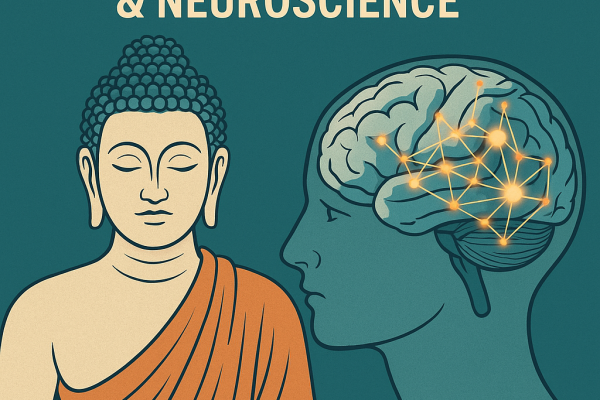
Buddhist Psychology & Neuroscience: Where Ancient Wisdom Meets Modern Science

In the last few decades, scientists have begun to confirm what Buddhist monks and meditators have known for over 2,500 years:The mind can be trained. Suffering can be transformed. Awareness changes the brain. From Buddhist models of the mind like the Abhidhamma to the latest discoveries in neuroscience and mindfulness research, a powerful bridge is forming — offering new hope for healing trauma, depression, anxiety, and addiction. Let’s explore how Buddhist psychology and neuroscience are aligning in profound, life-changing ways. What Is Buddhist Psychology? Unlike Western psychology, which often focuses on diagnosing disorders and treating symptoms, Buddhist psychology is fundamentally ethical and experiential. It sees the mind not as a fixed thing, but as a dynamic process shaped by intention, perception, and karma. At its core, Buddhist psychology aims at liberation — freeing the mind from greed, hatred, and delusion through practices like mindfulness (sati), concentration (samadhi), and wisdom (paññā). The Abhidhamma: A Map of Consciousness The Abhidhamma Pitaka, one of the core texts in Theravāda Buddhism, offers a deep, analytical model of the mind. It breaks consciousness into: It categorizes emotions, thoughts, and mental habits with remarkable precision — long before modern psychology or neuroscience emerged. Today, cognitive science is beginning to mirror this complexity, using fMRI and neuroimaging to identify neural correlates of emotion, attention systems, and habit loops — echoing the Buddhist insight that the mind is conditioned, impermanent, and trainable. Neuroscience Meets Mindfulness In clinical and lab settings worldwide, Buddhist meditation practices are being studied for their powerful effects on the brain. The science is clear: Meditation for Trauma, Depression & Addiction Psychologists and neuroscientists are now using Buddhist-inspired techniques in treatments for: In all these cases, the emphasis is not just on symptom reduction — but on transforming one’s relationship to pain, emotion, and the self. Karma, Neuroplasticity & the Changing Brain A core idea in Buddhist psychology is that the mind is not static. We are what we repeatedly think and do. This aligns beautifully with the modern concept of neuroplasticity — the brain’s ability to rewire itself through repetition and intention. The Buddhist path is, in this sense, a science of mind: a step-by-step method for rewiring the brain toward compassion, clarity, and freedom. The Promise of Integration The convergence of Buddhism and neuroscience is not about merging belief systems, but about deepening our understanding of what it means to be human.Therapists, researchers, monks, and meditators are now co-creating a world where contemplative wisdom and cognitive science support one another — from hospitals to classrooms to meditation centers. This integration gives rise to: Final Thoughts: A Mindful Revolution As Buddhist psychology and neuroscience continue to evolve side by side, the message is hopeful and urgent:We can train the mind. We can reshape the brain. And we can heal — not just individually, but collectively. In a world grappling with mental health crises and digital overload, the ancient insights of the Buddha offer not just relief, but a radical path of inner transformation.

Read More

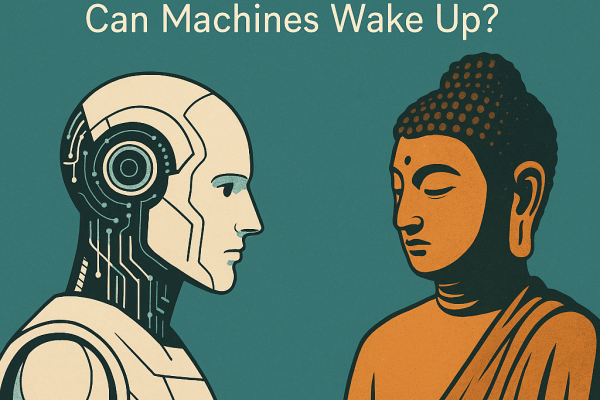
Buddhism & AI : Can AI Attain Enlightenment

In an era where artificial intelligence, machine learning, and virtual reality are reshaping how we live, work, and even think — it’s only natural that people are asking:Can AI attain enlightenment?What do Buddhist ethics say about AI, consciousness, and the future of human values? This article explores the intersection of Buddhism and technology from both a philosophical and ethical perspective, offering insights grounded in ancient wisdom and relevant to today’s digital world. What Is Enlightenment in Buddhism? Before asking whether AI can be enlightened, we must first understand what enlightenment (bodhi) means in Buddhism. In the Buddhist tradition, enlightenment is the realization of the Four Noble Truths and liberation from samsara, the cycle of birth, death, and rebirth. This realization involves deep experiential insight into: Achieving enlightenment also requires mindfulness (sati), ethical conduct (sīla), mental cultivation (samādhi), and wisdom (paññā) — all developed through intentional effort, karma, and rebirth. AI lacks all of these in the Buddhist sense. Can Artificial Intelligence Be Conscious? This is a hot topic not only in Buddhism, but in philosophy, neuroscience, and AI ethics. Despite advances in machine learning, natural language processing, and even emotional simulation, current AI lacks sentience — the ability to have subjective experiences. It also lacks intention (cetana), which is a core component of karma in Buddhist psychology. In the Anguttara Nikāya 6.63, the Buddha says:“It is volition, monks, that I call karma; for having willed, one acts by body, speech, and mind.” AI cannot generate karma, because it does not intend in the ethical or moral sense. It processes data, not suffering. It simulates thought, not wisdom. So while people often search online for “can AI attain enlightenment,” the Buddhist answer is clear:AI cannot be enlightened because it does not have consciousness or moral volition. Buddhist Ethics in the Age of AI Even though AI cannot be enlightened, Buddhism has a lot to say about how we use AI. One of the core aspects of Buddhist practice is ethics (sīla) — guidelines for actions that reduce harm and increase well-being for all beings. As AI becomes embedded in everything from healthcare to warfare to digital entertainment, Buddhist ethics urge us to ask: For example: People are increasingly searching for “ethical AI from a Buddhist perspective” or “spiritual responsibility in tech development” — and Buddhism provides a rich ethical framework for those discussions. Virtual Reality and Buddhist Practice One of the most interesting intersections is between Buddhism and virtual reality (VR). Imagine a digital zendo or forest monastery where practitioners can meditate together from anywhere on Earth. VR meditation apps, AI Dharma teachers, and immersive retreats in the metaverse are already emerging. While VR may not replace real-world mindfulness and meditation, it can help people access the teachings, create community, and explore consciousness in new ways. Still, Buddhism reminds us: liberation comes not from escape into fantasy, but from direct awareness of reality, just as it is. So the challenge becomes using VR mindfully, not as a distraction but as a tool for awakening. The Future of Technology and Buddhist Wisdom As technology advances, the Dharma remains timeless. While AI cannot attain enlightenment, we — as humans — must ask how we use these tools. Can they serve compassion instead of greed?Can we build technologies that promote mindfulness, ethics, and wisdom — not just efficiency and profit? The Buddhist path is about awakening, and the modern world gives us both incredible distractions and powerful opportunities. With right view and right intention, we can shape a digital future aligned with Buddhist values. Key Takeaways

Read More

Rebirth & Karma in the Modern World: Can You Believe in Them Today?

What Is Rebirth in Buddhism? In Buddhism, rebirth is not the same as reincarnation. When people search for “rebirth vs reincarnation,” they’re often confused by how the two differ. Buddhism teaches that there is no permanent soul or self (anattā) that migrates from one life to the next. Instead, consciousness continues through causes and conditions (paticca samuppāda). “It is volition, monks, that I call kamma; for having willed, one acts by body, speech, and mind.” — Anguttara Nikāya 6.63 This means what we call “you” is actually a dynamic stream of mental formations, habits, and actions, not a static self. Rebirth is the continuation of that stream — conditioned by kamma (Pāli for karma). Is Rebirth Scientific? Can You Believe in Rebirth Today? A common Google search today is: “Can you believe in rebirth in the modern scientific world?” And the answer is — you don’t need to suspend reason to consider the Buddhist view. While Buddhism does not depend on blind faith, it invites deep contemplation. The Buddha encouraged inquiry: “Do not go by reports, by legends, by traditions… but when you know for yourselves: ‘These things are wholesome…’ then accept them.” — Kalama Sutta (AN 3.65) In recent decades, researchers like Dr. Ian Stevenson and Dr. Jim Tucker from the University of Virginia studied thousands of verified cases where children remembered past lives with striking accuracy — including names, locations, and causes of death. These scientifically documented cases of rebirth are now frequently searched online, especially under terms like “proof of reincarnation” or “scientific evidence for rebirth.” Although science has not definitively proven rebirth, it has not disproven consciousness beyond brain activity, either — leaving room for exploration. What Is Karma in Buddhism? (And What It’s Not) When people type “What is karma in Buddhism?” into Google, they’re often met with confusing or misleading answers. Let’s be clear:Karma is not fate, and it is not divine punishment. In early Buddhism, karma means intentional action — and its ethical consequences. “Intention, I tell you, is kamma.” — Anguttara Nikāya 6.63 Everything we think, say, or do shapes our future. This includes not only our external circumstances but also our internal landscape — our thoughts, emotions, and tendencies. Modern psychology now echoes this with studies showing that habits shape the brain. This is why Buddhism and neuroscience is a trending search — people want to understand how karma connects to mental patterns, neuroplasticity, and personal transformation. So, if you’re wondering, is karma real?, the Buddhist answer is simple: karma is not some invisible cosmic retribution, but a natural law of cause and effect rooted in ethical intention. How Rebirth and Karma Affect Daily Life You don’t have to be a monk or scholar to see how karma works in everyday life. People who search for “how karma affects your life” or “how to create good karma” are looking for actionable, real-life insight. Here’s the Buddhist view: In this way, rebirth happens moment to moment — not just after death. This idea of psychological rebirth is especially powerful in the modern world. “With our thoughts, we make the world.” — Dhammapada 1:1 Can I Be a Buddhist Without Believing in Rebirth? This is one of the most asked questions on forums like Quora and Reddit:“Can I be a Buddhist without believing in rebirth?” Yes — many people today identify as secular Buddhists or practical Buddhists, applying mindfulness, ethics, and meditation to daily life without necessarily accepting rebirth literally. However, even a metaphorical understanding of rebirth — as the unfolding of habits, choices, and consequences — still holds great value. For example, the Dalai Lama has said: “Whether you accept rebirth or not, it is important to live a life of compassion, non-violence, and responsibility.” Buddhism, Karma, and the Brain There’s growing interest in the overlap between Buddhist psychology and modern neuroscience. Searches like “Buddhism and the mind,” “karma and brain science,” and “meditation rewires the brain” have skyrocketed in recent years. Buddhist teachings on mental formations (saṅkhāra) and habitual patterns closely mirror what we now understand through neuroplasticity. In simple terms: repeated thoughts and actions shape your brain — just like karma teaches. “All experiences are preceded by mind, led by mind, made by mind.” — Dhammapada 1:1 This is karma in real time. You’re constantly shaping your consciousness. 🧭 Final Reflection: Why Rebirth and Karma Still Matter Today In an age dominated by instant gratification, AI, and materialism, Buddhist ideas like rebirth and karma remind us to pause, reflect, and take responsibility for our lives. They offer: Whether taken literally, metaphorically, or philosophically, these teachings encourage a life of mindfulness, compassion, and accountability. “Just as a seed produces fruit, so too does intentional action bear results.” — Majjhima Nikāya 57

Read More

Nibbana (Nirvana): The Ultimate Goal in Buddhist Philosophy

Introduction Nibbana (Pali) or Nirvana (Sanskrit) is the ultimate goal of Buddhist practice. It represents the cessation of suffering (dukkha) and the end of the cycle of birth, death, and rebirth (samsara). Unlike many religious traditions that describe a heavenly abode or an afterlife, Nibbana is not a physical place but a profound experiential state. It signifies the complete eradication of desires, cravings, and attachments, leading to true liberation and peace. The Meaning and Interpretation of Nibbana The term “Nibbana” is derived from the root words ni (without) and vana (craving or attachment). Thus, it means “the state without craving.” The concept is often metaphorically described as the extinguishing of a flame, signifying the cessation of the fires of greed (lobha), hatred (dosa), and ignorance (moha). As explained in The Dhammapada, the Buddha taught that those who attain Nibbana transcend suffering and achieve unshakable peace. Nibbana is classified into two stages: Path to Nibbana: The Noble Eightfold Path The Buddha prescribed the Noble Eightfold Path as the practical means to attain Nibbana. This path consists of: This ethical and meditative path emphasizes moral conduct (sila), mental discipline (samadhi), and wisdom (panna), as elaborated in Majjhima Nikaya and Visuddhimagga. Differences Between Nibbana and Other Religious Concepts Buddhism’s emphasis on personal effort and ethical living contrasts with the ritualistic approach of the Vedic tradition, where sacrifices and prayers played a crucial role. The Buddha rejected the efficacy of rituals and external deities in achieving liberation, asserting that inner transformation was the key to ending suffering. Unlike the concept of moksha in Hinduism, which often involves uniting with Brahman, Nibbana is described as beyond conceptualization, as it is a state beyond existence and non-existence. In Udana 8:3, the Buddha states, “There is an unborn, uncreated, unconditioned state. If there were not this unborn, uncreated, unconditioned state, there would be no escape from the born, created, and conditioned.” The Buddha’s Experience of Nibbana At the age of 35, after years of ascetic practices and meditation, Siddhartha Gautama attained enlightenment under the Bodhi tree in Bodh Gaya. He realized the Four Noble Truths and saw the dependent origination (paticca-samuppada) of all phenomena. This moment marked his liberation from suffering and the attainment of Nibbana, as described in The Mahaparinibbana Sutta. Misconceptions About Nibbana Attaining Nibbana in Daily Life While ultimate Nibbana is the goal, practicing mindfulness, loving-kindness (metta), and detachment in everyday life can lead to partial experiences of peace and wisdom. Lay practitioners are encouraged to follow the Five Precepts and cultivate generosity (dana) and compassion. Conclusion Nibbana remains the highest spiritual goal in Buddhism, representing freedom from suffering and the cycle of birth and rebirth. It is achieved not through rituals but through wisdom, ethical living, and meditative discipline. As emphasized in The Sutta Nipata, “One who has gone beyond, who is free from sorrow, who has broken all bonds—this one is what I call a Brahmin.” By understanding and practicing the principles leading to Nibbana, individuals can move toward a life of clarity, compassion, and ultimate liberation.

Read More
Buddhism Most Asked Questions Answered

Curious Questions about Buddhism Answered

Buddhism, one of the world’s oldest spiritual traditions, continues to spark curiosity among millions seeking wisdom, peace, and enlightenment. From questions about Buddha’s origins to daily practices like diet, tattoos, and meditation, people often turn to Google for answers. To provide clarity, our experts have answered some of the most searched questions about Buddhism, drawing insights from authentic Buddhist scriptures such as the Pali Canon, Vinaya Pitaka, and Mahayana Sutras. Whether you’re exploring Buddhism for the first time or deepening your understanding, these expert-backed responses will guide you with accuracy and tradition. Can I be Buddhist if I’m white? Yes, Buddhism is a spiritual path open to all, regardless of race or ethnicity. The Buddha’s teachings focus on wisdom, compassion, and self-awareness, and anyone can follow them. Many Westerners have embraced Buddhism over the years. Reference: The Dhammapada, Theravāda Buddhism Texts How many hours did Buddha sleep? According to Buddhist scriptures, the Buddha slept for about 4 hours a night, from 10 PM to 2 AM. He dedicated the rest of his time to meditation and teaching. Reference: Vinaya Pitaka, Theravāda Canon Can you drink alcohol if you’re a Buddhist? Buddhism generally discourages alcohol consumption as it clouds the mind and hinders mindfulness. The Fifth Precept advises against intoxicants that lead to heedlessness. Reference: Sigalovada Sutta, Dīgha Nikāya Is it OK to keep a Sleeping Buddha at home? Yes, keeping a Sleeping Buddha statue at home is fine, as long as it is placed respectfully in a clean and elevated area. It symbolizes peace, enlightenment, and the transition to Nirvana. Reference: Buddhist Art and Iconography Texts What is unusual about a Buddhist marriage? Buddhist marriages are generally simple and secular. Buddhism does not prescribe specific rituals but emphasizes mutual respect, love, and understanding between partners. Many Buddhists seek blessings from monks rather than conducting religious ceremonies. Reference: Sigalovada Sutta, Dīgha Nikāya Can Buddhists have tattoos? Yes, Buddhists can have tattoos, and many choose sacred symbols or mantras. However, in some Buddhist cultures, tattooing sacred images (like the Buddha) on inappropriate body parts may be considered disrespectful. Reference: Theravāda & Mahāyāna Teachings on Respect Can Buddhists drink caffeine? Yes, Buddhists can drink caffeine. However, some monastic traditions may limit or avoid it to maintain mindfulness and avoid over-stimulation. Reference: Vinaya Pitaka, Monastic Rules Can Buddhists eat pork? It depends on the tradition. Theravāda monks traditionally eat whatever is offered, including pork, as long as the animal was not killed specifically for them. Many Mahāyāna Buddhists, especially in China and Vietnam, follow vegetarian diets. Reference: Jivaka Sutta, Anguttara Nikāya Is Buddha Chinese or Indian? The Buddha, Siddhartha Gautama, was born in Lumbini, present-day Nepal, and attained enlightenment in India. His teachings spread from India to China, Tibet, and other parts of Asia over centuries. Reference: Mahāparinibbāna Sutta, Theravāda Canon Are Buddhists Christians? No, Buddhism and Christianity are separate religions with different beliefs. Buddhism does not revolve around a creator god, while Christianity is centered on faith in God and Jesus Christ. However, some individuals appreciate and incorporate elements of both traditions in their personal spiritual journey. Reference: Buddhist-Christian Dialogue Texts What is the meaning of Baudh Dharma? “Baudh Dharma” (Buddhism) means the path of awakening or enlightenment, based on the teachings of the Buddha. It emphasizes wisdom, compassion, and liberation from suffering. Reference: The Four Noble Truths, Pali Canon What is Buddha’s religion? The Buddha did not follow an existing religion but taught a path to enlightenment based on personal experience. His teachings later became known as Buddhism. Reference: Dhammacakkappavattana Sutta, Pali Canon Which country is 100% Buddhist? No country is 100% Buddhist, but Bhutan and Cambodia have the highest percentages, with over 90% of their populations following Buddhism. Reference: Pew Research on Religious Demographics What are the 4 principles of Gautam Buddha? The Four Noble Truths form the core of Buddha’s teachings: Reference: Dhammacakkappavattana Sutta, Pali Canon Buddhism’s timeless wisdom continues to inspire curiosity and spiritual exploration worldwide. Through authentic scriptures and expert insights, we have addressed some of the most frequently asked questions, offering clarity on Buddhist beliefs, practices, and traditions. However, these are just a few of the many questions people seek answers to. For a more in-depth exploration, including additional queries on Buddhism, visit IBH Forum’s Most Asked Questions on Buddhism and deepen your understanding of this profound path to enlightenment.

Read More
Tonglen Meditation

How to Practice Tonglen Meditation

Pema Chödrön teaches us Tonglen, or “sending and taking,” an ancient Buddhist practice to awaken compassion. This practice reverses the usual habit of avoiding suffering and seeking pleasure. By practicing Tonglen, we connect with a larger sense of reality and develop compassion for both ourselves and others. In Tonglen, we visualize taking in the pain of others with each in-breath and sending out relief and well-being with each out-breath. This process liberates us from patterns of selfishness and introduces us to the vast spaciousness of shunyata (emptiness). Whether performed as a formal meditation or spontaneously in everyday life, Tonglen is a powerful path to cultivating compassion. The Essence of Tonglen Meditation Rather than avoiding our personal suffering, Tonglen encourages us to use it as a stepping stone for understanding and compassion. The Four Stages of Tonglen Meditation When practiced formally, Tonglen consists of four stages: 1. Flash on Bodhichitta 2. Begin the Visualization 3. Focus on a Personal Situation 4. Expand Your Compassion Practical Applications of Tonglen Tonglen can be practiced anytime, anywhere: Why Practice Tonglen? By practicing Tonglen, we discover the boundless capacity of the human heart to embrace and alleviate suffering. As Pema Chödrön teaches, “Breathe in for all of us and breathe out for all of us. Use what seems like poison as medicine.”

Read More